

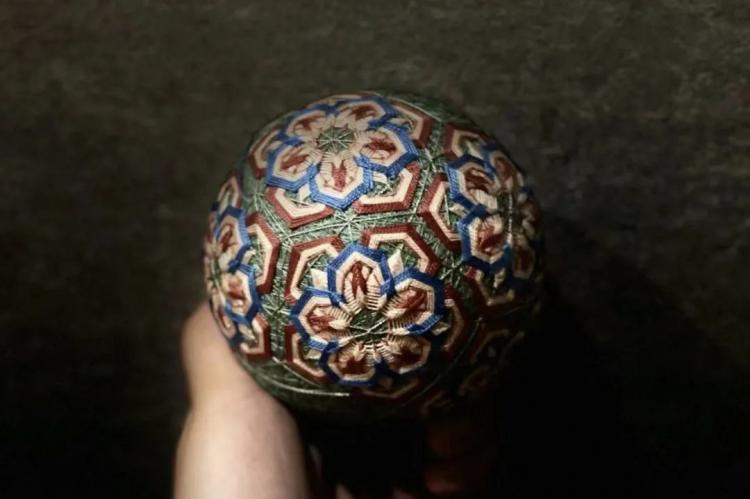
手鞠球,又称手毬,盛唐时通过遣唐使者传入东瀛,成为贵族的游戏玩具,后来慢慢演变成民间的一种精致的传统工艺品,供收藏者观赏把玩。手鞠,又称手毬,盛唐时通过遣唐使者传入东瀛,成为贵族的游戏玩具,后来慢慢演变成民间的一种精致的传统工艺品,供收藏者观赏把玩。
Handball, also known as handball, was introduced to Japan during the prosperous Tang Dynasty through envoys and became a game toy for the nobility. Later, it gradually evolved into a delicate traditional folk craft for collectors to watch and play with. Hand Ju, also known as Hand Ball, was introduced to Japan during the prosperous Tang Dynasty through envoys and became a game toy for the nobility. Later, it gradually evolved into a delicate traditional folk craft for collectors to enjoy and play with.
制作步骤
Production Steps
1.缠素球:首先,用准备好的材料(如毛边纸或宣纸)将一小把荞麦皮包起来,然后用缝纫线缠绕成圆球形状。在缠绕过程中,尽量不要让线重叠,并且控制圆球的直径在8-9cm左右。
1. Wrap a small handful of buckwheat husks with prepared materials (such as edge paper or rice paper), and then wrap them with sewing thread to form a round ball shape. During the winding process, try not to let the lines overlap and control the diameter of the ball to be around 8-9cm.
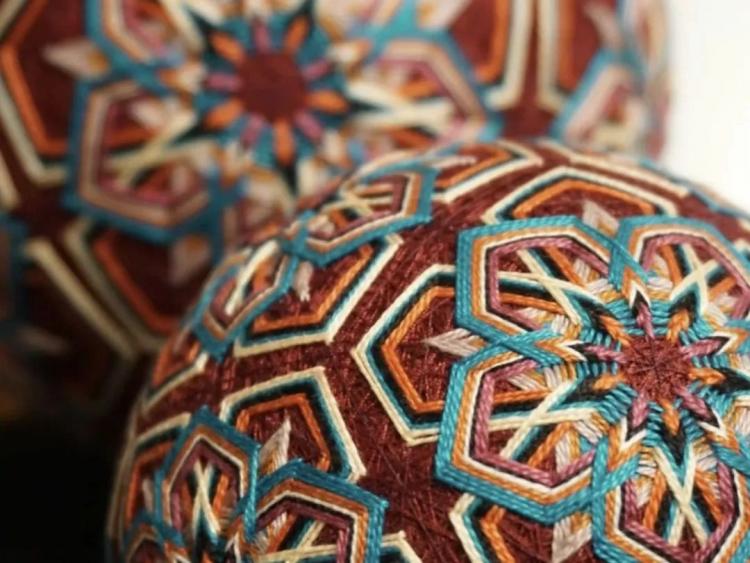
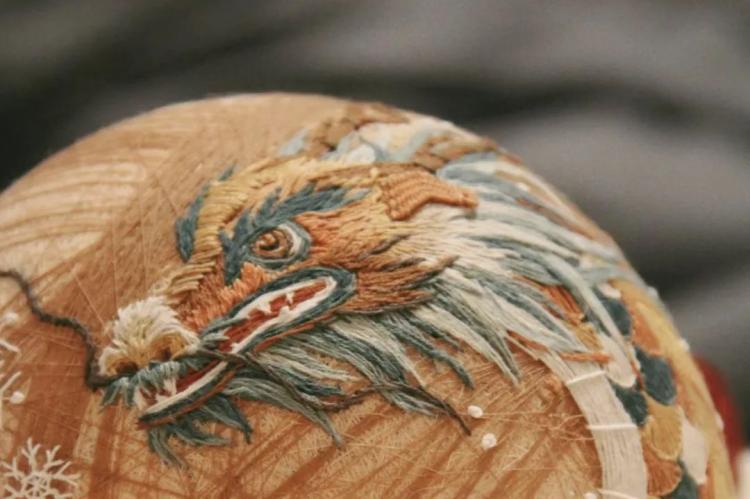
2.分区域:接下来,用线将球体基本分出区域。具体做法是用线沿着球体经度,将其均分出8个等份,中间加上一条“赤道”。
2. Division: Next, use lines to roughly divide the sphere into different regions. The specific method is to divide the sphere into 8 equal parts along its longitude with a line and add an equator in the middle.
3.绣基线:选择距离“赤道”2cm的任意一条经线处作为起点,向右绣制,中间隔开一条经线,再从南极点下面1cm处入针。以此类推,进行绣制。
3. Embroidery baseline: Select any meridian 2cm away from the equator as the starting point, embroider to the right, with a meridian separated in the middle, and then insert the needle 1cm below the South Pole. And so on, embroider.
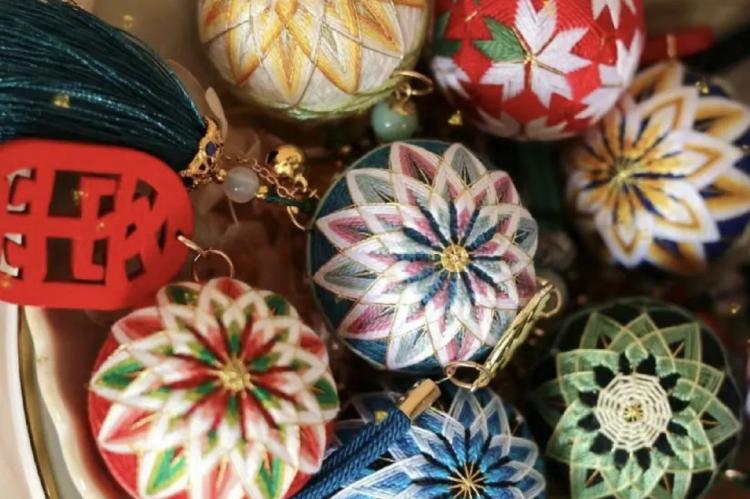
4.绣重线:从第二圈起向左移一条线进行绣制,同样距离赤道上2cm处起针,向右开始绣制。将预先准备的彩线的色彩搭配逐渐绣出。
4. Embroidering heavy thread: Starting from the second circle, move one thread to the left to embroider. Start sewing at a distance of 2cm from the equator and start embroidering to the right. Gradually embroider the colour combinations of the pre-prepared coloured threads.
总结
Summarize
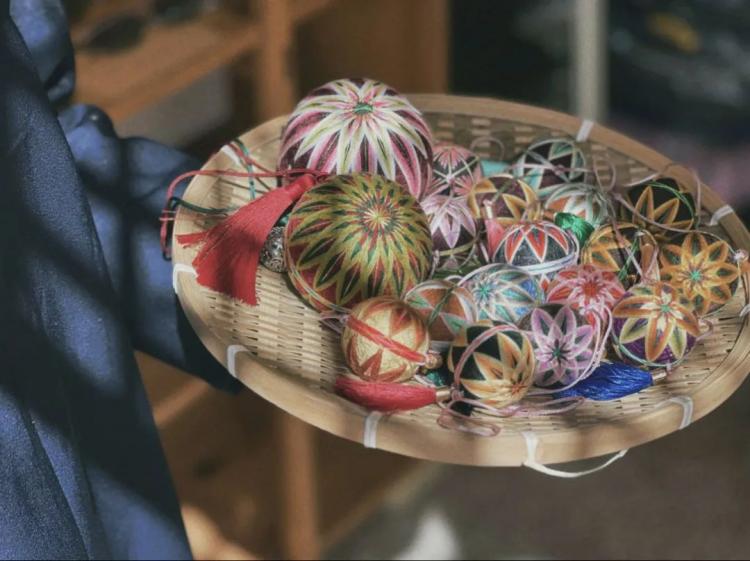
■ Handbow ball ■
手鞠里居住着稻荷神的使者、小狐仙“阿玉”。所以只要将手鞠时刻带在身边,就能受到护佑,可保平安、不被异灵所扰。因此,人们将手鞠作为带来好运和象征幸福的礼物而互相赠送。
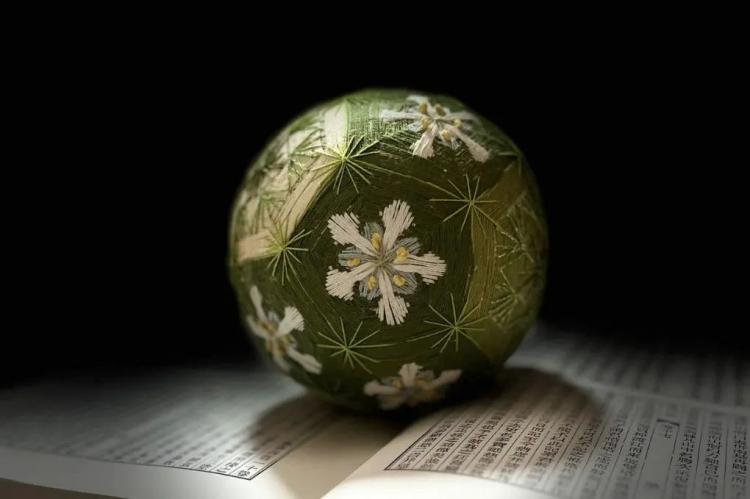
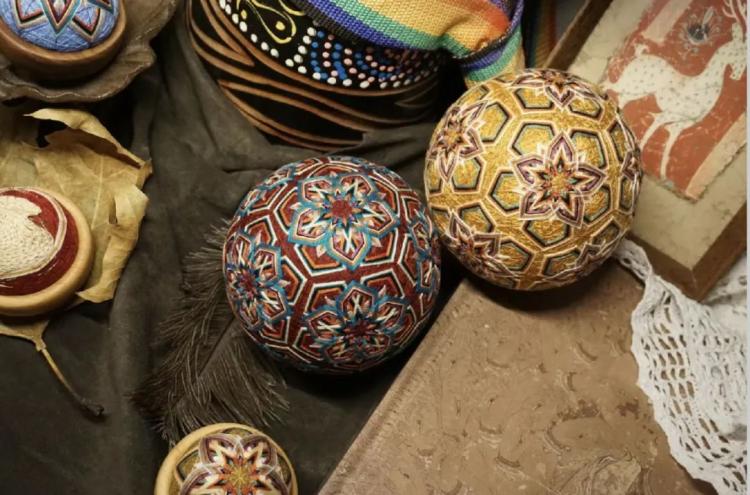
——— 手鞠开花节节高,好运连连天天妙
【Handbow ball】
......
“手鞠”是由中国首批非物质文化遗产“蹴鞠”演变而来的, “蹴鞠”所用之“鞠”即手鞠球,其起源最早可上溯到约十万年前丁村文化遗址出土的狩猎工具——石球,到了原始社会后期,出现了用脚踢的石球及镂空的陶球。两汉三国时期,“蹴鞠”发展成为休闲娱乐用品,唐代以后,“手鞠”在贵族阶层中十分盛行。公元7世纪流传至日本,发展成为一种名副其实的民间工艺形式。后来,经过改造创新,逐渐变成了集刺绣、编织、构图为一身的高级礼品与精美艺术品。
"Handbow ball" evolved from the first batch of intangible cultural heritage "Cuju" in China. The "ju" used in "Cuju" refers to the hand Ju ball, which can be traced back to the hunting tool - the stone ball - unearthed from the Dingcun Cultural Site about 100000 years ago. In the later stage of primitive society, stone balls were kicked with feet and hollow ceramic balls appeared. During the Han and Three Kingdoms periods, "cuju" developed into a leisure and entertainment item. After the Tang Dynasty, "hand ju" became very popular among the aristocratic class. It spread to Japan in the 7th century and developed into a truly folk craft form. Later, through transformation and innovation, it gradually became a high-end gift and exquisite artwork that combines embroidery, weaving, and
版权声明:【除原创作品外,本平台所使用的文章、图片、视频及音乐属于原权利人所有,因客观原因,或会存在不当使用的情况,如,部分文章或文章部分引用内容未能及时与原作者取得联系,或作者名称及原始出处标注错误等情况,非恶意侵犯原权利人相关权益,敬请相关权利人谅解并与我们联系及时处理,共同维护良好的网络创作环境,联系邮箱:603971995@qq.com】