

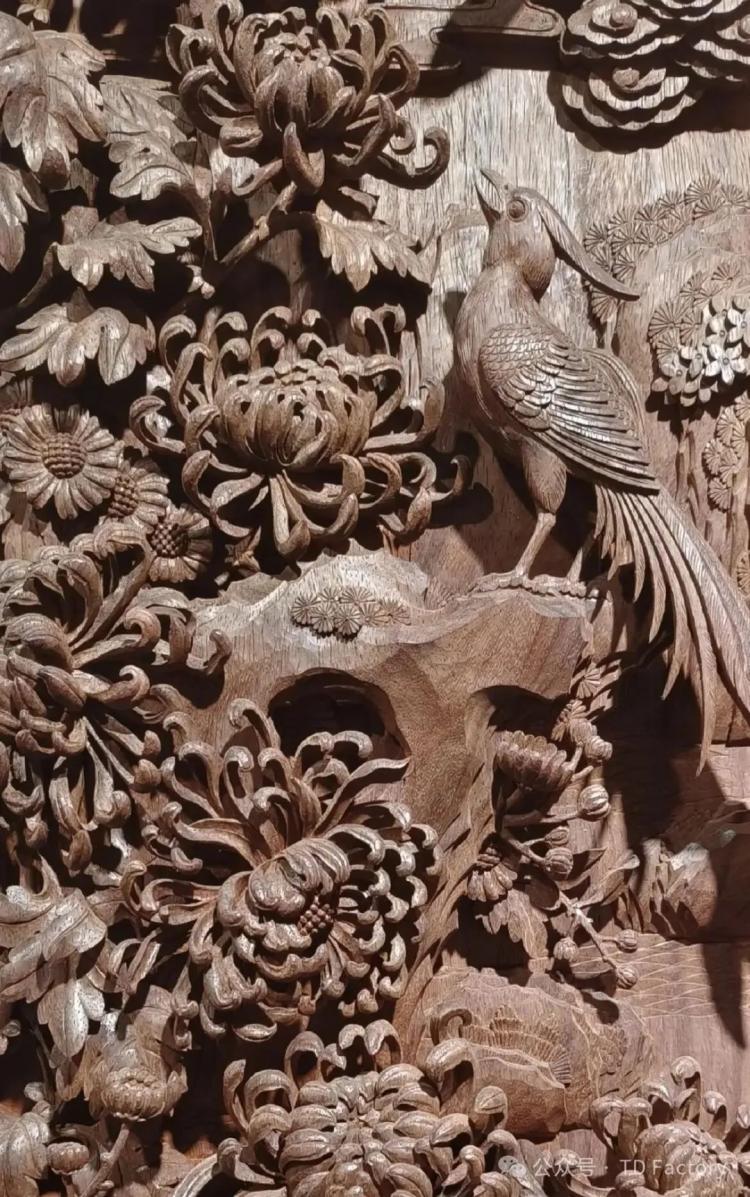

The golden dragon is carved into the sky, and the rooster is carved to announce the fifth watch.

Historical origins
历史起源
在剑川海门口遗址出土的 5300 多年前的木制农具、建筑木构件来看,那时剑川地区的先民就已经掌握了一定的木头加工制作技艺,这可以视为剑川木雕的远古源头。
Judging from the wooden agricultural tools and building wooden components unearthed at the Jianchuan Haimenkou site more than 5,300 years ago, the ancestors of the Jianchuan area had already mastered certain wood processing and production skills at that time, which can be regarded as the ancient source of Jianchuan wood carving.
史料记载唐代时剑川木匠承担了南诏五华楼木雕构件的制作工作,这表明当时剑川木雕技艺已经达到了较高水平,能够承担大型建筑的木雕装饰任务,从侧面反映出剑川木雕在这一时期已经有了一定的规模和影响力。
Historical records record that during the Tang Dynasty, Jianchuan carpenters undertook the production of wood carving components of Nanzhao Wuhua Tower, which shows that Jianchuan wood carving skills had reached a high level at that time, and could undertake the task of wood carving decoration of large buildings, reflecting that Jianchuan wood carving had a certain scale and influence during this period.
到了宋代有位剑川木雕艺人进京献艺,轰动京华,这说明剑川木雕的技艺不仅得到了本地的认可,还在更广泛的范围内获得了赞誉,其工艺水平和艺术价值已经达到了相当高的程度,开始在全国范围内崭露头角。
In the Song Dynasty, a Jianchuan woodcarving artist entered Beijing to perform, causing a sensation in Beijing, which shows that Jianchuan's woodcarving skills have not only been recognised locally, but also praised in a wider range, and its craftsmanship level and artistic value have reached a fairly high level, and began to emerge nationwide.
明清时期,剑川木雕艺术类别、风格样式更为繁荣,建筑木雕开始转向追求繁复华贵的美感,木雕从开始的单线雕刻发展到七层镂空,极致的透雕成为剑川木雕最显著的特征。清代学者张泓在其《滇南新语》中记述:“滇之七十余县及邻滇之川黔桂等省,善规矩斧凿者,随地皆剑民也”,可见当时剑川木雕木匠之众多,流传之普遍,剑川木雕在这一时期达到了鼎盛。
In the Ming and Qing dynasties, the art categories and styles of Jianchuan wood carving were more prosperous, and architectural wood carving began to turn to the pursuit of complex and luxurious beauty. Qing Dynasty scholar Zhang Hong recorded in his "New Words of Southern Yunnan": "More than 70 counties in Yunnan and the provinces of Sichuan, Qiangui and other provinces in neighboring Yunnan, those who are good at rules and axes and chisels, are sword people everywhere", it can be seen that there were many Jianchuan wood carving carpenters at that time, and the circulation was widespread, and Jianchuan wood carving reached its peak during this period.
清末民初,木雕技术开始走出剑川,大批剑川工匠带着各自精湛的手艺走出家乡,将剑川木雕带到五湖四海。新中国成立后,剑川木雕有了较大的发展,开始走进北京人民大会堂、民族文化宫等。改革开放以来,剑川木雕更是迎来了新的机遇,不仅在国内市场上受到欢迎,还走出国门,远销欧、美等数十个国家和地区。
At the end of the Qing Dynasty and the beginning of the Republic of China, wood carving technology began to go out of Jianchuan, and a large number of Jianchuan craftsmen went out of their hometowns with their exquisite craftsmanship, bringing Jianchuan wood carving all over the world. After the founding of New China, Jianchuan wood carving has developed, and lb began to have exhibitions in the Great Hall of the People in Beijing and the National Culture Palace. Since the reform and opening up, Jianchuan wood carving has ushered in new opportunities, not only in the domestic market but also exported to dozens of countries and regions, mainly Europe and the United States.

Intangible
cultural heritage
Jianchuan
wood
carving

Intangible cultural heritage
TD Factory
Jianchuan wood carving
Production process
制作工序
一、原料准备
1. Raw material preparation
选料 Material selection
剑川木雕以本地硬木为主,如香樟、云杉、红豆杉、黄杨木等。匠人会根据作品用途(如建筑构件、家具、摆件)选择木材:建筑木雕需选耐腐、不易变形的香樟;精细摆件则多用质地细腻的黄杨木。选料时需观察木材纹理、密度,避开结疤、裂纹,确保原料坚实耐用。
Jianchuan wood carving is mainly based on local hardwoods, such as camphor, spruce, yew, boxwood, etc. Craftsmen will choose wood according to the purpose of the work (such as architectural components, furniture, ornaments): architectural wood carving needs to choose camphor that is resistant to corrosion and is not easy to deform; fine ornaments are mostly made of boxwood with a delicate texture. When selecting materials, it is necessary to observe the texture and density of the wood, avoid scars and cracks, and ensure that the raw materials are solid and durable.
干燥处理 Dry treatment
新伐木材含水分较高,需经自然晾晒或烘干处理(传统以自然晾晒为主,耗时数月至数年),使木材含水率降至 10%-15%,避免成品开裂、变形。干燥过程中需定期翻动木材,保证水分均匀流失。
Freshly cut wood has a high moisture content and needs to be dried or dried naturally (traditionally, it is mainly natural drying, which takes several months to several years), so that the moisture content of the wood is reduced to 10%-15% and to avoid cracking and deformation of the finished product. During the drying process, the wood needs to be turned regularly to ensure even moisture loss.
二、设计与打坯
2. Design and blanking
绘图设计 Drawing design
匠人根据需求构思图案(常见题材有山水、花鸟、人物、吉祥纹样等),先在纸上绘制草图,再将图案拓印或直接画在木材表面,标记出雕刻的层次、深浅和细节,为后续雕刻提供精准依据。
The craftsman conceives the pattern according to the needs (common themes include landscapes, flowers and birds, characters, auspicious patterns, etc.), first draws a sketch on the paper, and then rubbs the pattern or draws it directly on the surface of the wood, marking the layers, depths and details of the carving, providing an accurate basis for subsequent carving.
打坯(粗雕) Blank (rough carving)
用大凿、斧头等工具去除木材多余部分,勾勒出作品的整体轮廓和主要结构。这一步需把控整体比例,确定浮雕的高低、透雕的镂空位置,为细雕奠定基础。例如雕刻花鸟题材时,先凿出花鸟的大致形态和枝干的走向。
Remove excess wood with tools such as chisels and axes, outlining the overall outline and main structure of the work. In this step, it is necessary to control the overall proportion, determine the height of the relief, and the hollow position of the carving to lay the foundation for fine carving. For example, when carving flowers and birds, first chisel out the general shape of flowers and birds and the direction of the branches.
三、精细雕刻
3. Fine carving
修光(细雕) Fine detailing (exquisite carving)
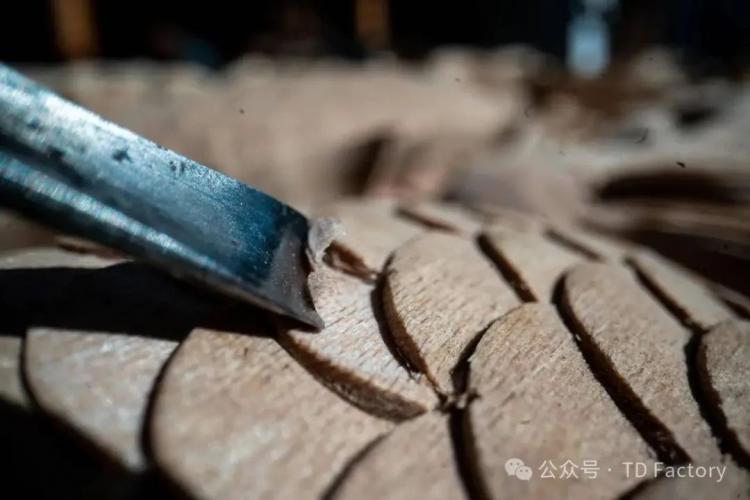
用平凿、斜凿、圆凿等小型工具对粗坯进行细化,打磨轮廓边缘,刻画细节纹理(如花瓣的脉络、人物的衣纹、动物的毛发)。修光需做到线条流畅、棱角分明,使图案层次清晰。
Use small tools such as flat chisels, oblique chisels, and round chisels to refine the rough blanks, polish the edges of the contours, and depict detailed textures (such as the veins of petals, the clothing patterns of characters, and the hair of animals). The lighting needs to be smooth and angular, so that the pattern level is clear.
镂空透雕 Hollow carving
这是剑川木雕最具特色的工序,通过钻、凿、刻等技法实现多层镂空(最多可达七层)。匠人需从外层向里层逐层雕刻,先确定镂空区域,用钻子打穿关键节点,再用细凿剔除多余木材,使作品立体感极强,透光时层次分明,如 “百鸟朝凤” 题材中,鸟的羽翼、枝叶的穿插都需通过透雕展现灵动。
This is the most characteristic process of Jianchuan wood carving, which realises multi-layer hollowing (up to seven layers) through drilling, chiselling, carving and other techniques. The craftsman needs to carve layer by layer from the outer layer to the inside, first determine the hollow area, use a drill to penetrate the key nodes, and then use a fine chisel to remove the excess wood, so that the work has a strong three-dimensional sense and clear layers when transmitting light.
四、打磨与修饰
4. Polishing and retouching
打磨 burnish
用不同粗细的砂纸(从粗砂到细砂)对作品反复打磨,从粗磨去除刀痕,到细磨使表面光滑细腻,甚至达到 “光可鉴人” 的效果。对于透雕、镂空部位,需用特制的细长砂纸或竹片裹砂打磨,确保无死角。
The work is repeatedly polished with sandpaper of different thicknesses (from coarse sand to fine sand), from coarse grinding to removing knife marks, to fine grinding to make the surface smooth and delicate, and even achieve the effect of "light can be recognised". For the carved and hollow parts, it is necessary to use special, slender sandpaper or bamboo shards to sand and polish to ensure that there are no dead ends.
修饰处理 Retouching treatment
部分作品会根据需求进行染色(传统多用植物染料,如苏木染红色、黄檗染黄色),或保留木材原色;
传统建筑木雕为防潮、防虫,会涂抹桐油或清漆,既保护木材,又增强纹理的美观度。
Some works will be dyed according to needs (traditional plant dyes such as hematoxy dye red, barberry dye yellow), or retain the original colour of the wood. Traditional architectural wood carving is moisture-proof and insect-proof, and tung oil or varnish will be applied to protect the wood and enhance the aesthetics of the texture.
五、组装与成品
5. Assembly and finished products
若为组合式作品(如家具、屏风),需进行榫卯组装,确保结构稳固,拼接处严丝合缝;
最终检查成品的细节是否完整,有无瑕疵,必要时进行补雕或修复,直至符合匠人对 “精工” 的要求。
If it is a combined work (such as furniture and screens), it needs to be assembled with mortise and tenon to ensure that the structure is stable and the splicing is tightly sealed; Finally, check whether the details of the finished product are complete and free of defects, and if necessary, repair or repair until it meets the craftsman's requirements for "Seiko".

<01>
技艺精湛
<02>
造型精美


<03>
文化多元
Intangible cultural heritage
Jianchuan wood carving
Inherit the status quo
传承现状
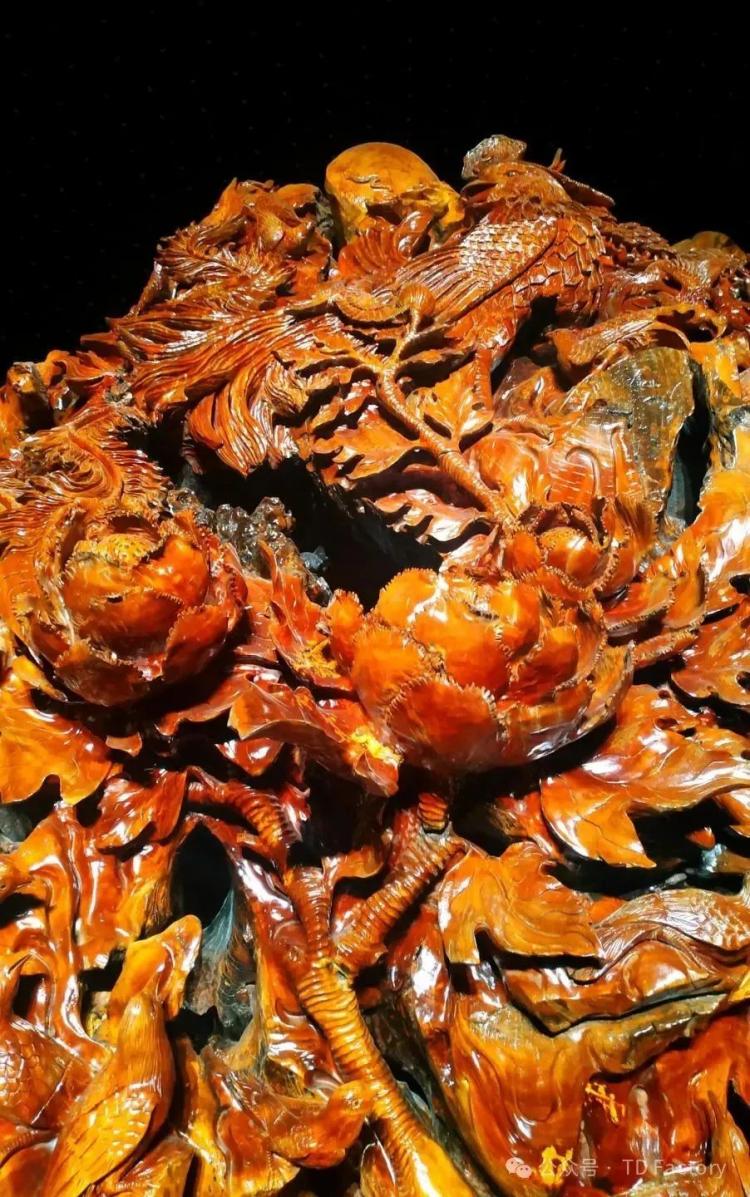


目前剑川仍有一批坚守传统的老匠人,通过家族传承、师徒制培养后辈,当地也成立了木雕协会、非遗工坊等机构,部分学校还开设相关课程。但年轻一代对传统手工艺的兴趣减弱,学习周期长、见效慢等问题,导致传承人数量增长缓慢。
At present, Jianchuan still has a group of old craftsmen who adhere to tradition, cultivating their descendants through family inheritance and master-apprenticeship, and the local government has also established wood carving associations, intangible cultural heritage workshops and other institutions, and some schools also offer relevant courses. However, the younger generation's interest in traditional handicrafts has weakened, and problems such as long learning cycles and slow results have led to slow growth in the number of inheritors.
为适应现代需求,部分匠人在保留传统技法的基础上,开发出家居装饰、文创产品等新形式,通过电商平台拓展销路。同时,剑川木雕与旅游业结合,建立木雕小镇、体验馆,增强了大众认知,但也存在部分产品同质化的问题。
In order to adapt to modern needs, some craftsmen have developed new forms such as home decoration and cultural and creative products on the basis of retaining traditional techniques, and expanded sales channels through e-commerce platforms. At the same time, Jianchuan wood carving and tourism have been combined to establish wood carving towns and experience halls, which have enhanced public awareness, but there is also a problem of the homogenization of some products.
Intangible cultural heritage
Jianchuan
wood
carving

Intangible cultural heritage
TD Factory
Jianchuan wood carving
Inheritance influence
传承影响

<02>
造型精美
<01>
技艺精湛
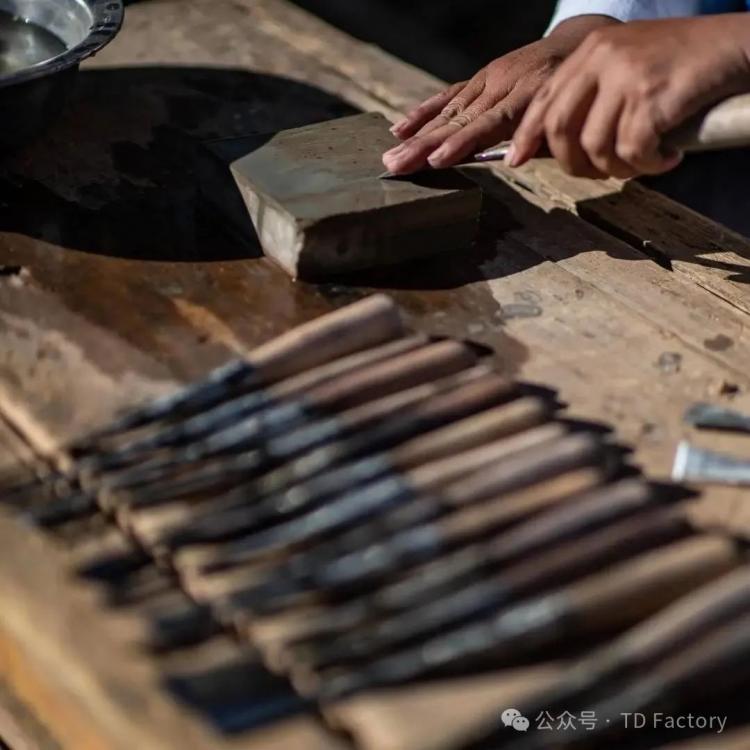
剑川木雕的题材(如佛教故事、中原戏曲、白族本主传说)和技法(融合北方木雕的粗犷与江南木雕的细腻),是白族与汉、藏等民族文化互动的见证,其传承让这种 “文化共生” 的历史得以可视化延续。
The themes (such as Buddhist stories, Central Plains opera, and Bai legends) and techniques (integrating the roughness of northern wood carving and the delicacy of Jiangnan wood carving) are witnesses of the interaction between the Bai people and the cultures of Han, Tibet and other ethnic groups, and their inheritance allows the history of this "cultural symbiosis" to be visualized and continued.
木雕中 “图必有意,意必吉祥” 的设计理念(如蝙蝠象征福气、牡丹代表富贵),以及 “虚实相生” 的构图法则,是白族审美观念的集中体现。通过师徒相授,这些美学基因得以代代相传,避免了民族文化符号的流失。
The design concept of "the picture must be intentional, the meaning must be auspicious" in wood carving (such as the bat symbolises blessings, the peony represents wealth), and the composition law of "virtual and real" is the concentrated embodiment of the Bai aesthetic concept. Through the teaching of masters and apprentices, these aesthetic genes can be passed down from generation to generation, avoiding the loss of national cultural symbols.
简言之,剑川木雕的传承不仅是技艺的延续,更是文化基因的传递、社会认同的强化和地方发展的赋能,使其在当代依然焕发着旺盛的生命力。
In short, the inheritance of Jianchuan wood carving is not only the continuation of skills, but also the transmission of cultural genes, the strengthening of social identity and the empowerment of local development, so that it still glows with vigorous vitality in contemporary times.
significance
意义
剑川木雕早已超越了 “技艺” 的范畴,它是流淌在时光里的文化长河 —— 从海门口遗址的原始木作到故宫的雕梁画栋,从白族院落的雕花窗棂到走向世界的艺术展品,每一刀刻痕都凝结着民族的智慧,每一层镂空都镶嵌着文明的对话。它以木为纸,以刀为笔,既记录着白族与各民族交融共生的历史密码,也承载着 “天人合一” 的东方美学;既是匠人掌心的温度传递,也是传统与现代碰撞的火花。这份传承,不仅是手艺的延续,更是一个民族对文化根脉的坚守,是中华文明多元一体格局中一颗璀璨的明珠,在岁月流转中始终焕发着 “让传统活在当下” 的生命力,成为连接过去、现在与未来的精神纽带。
Jianchuan wood carving has long gone beyond the category of "skills", it is a long river of culture flowing through time - from the original woodwork of the Haimenkou site to the carved beams and paintings of the Forbidden City, from the carved window lattices of the Bai courtyard to the art exhibits that go to the world, every knife notch condenses the wisdom of the nation, and every layer of hollows is inlaid with the dialogue of civilization. It uses wood as paper and knife as pen, which not only records the historical code of the integration and symbiosis of the Bai people and various ethnic groups, but also carries the oriental aesthetics of "the unity of nature and man"; It is not only the temperature transmission of the craftsman's palm, but also the spark of the collision of tradition and modernity. This inheritance is not only the continuation of craftsmanship, but also a nation's adherence to cultural roots, and a shining pearl in the pluralistic and integrated pattern of Chinese civilisation.
版权声明:【除原创作品外,本平台所使用的文章、图片、视频及音乐属于原权利人所有,因客观原因,或会存在不当使用的情况,如,部分文章或文章部分引用内容未能及时与原作者取得联系,或作者名称及原始出处标注错误等情况,非恶意侵犯原权利人相关权益,敬请相关权利人谅解并与我们联系及时处理,共同维护良好的网络创作环境,联系邮箱:603971995@qq.com】