

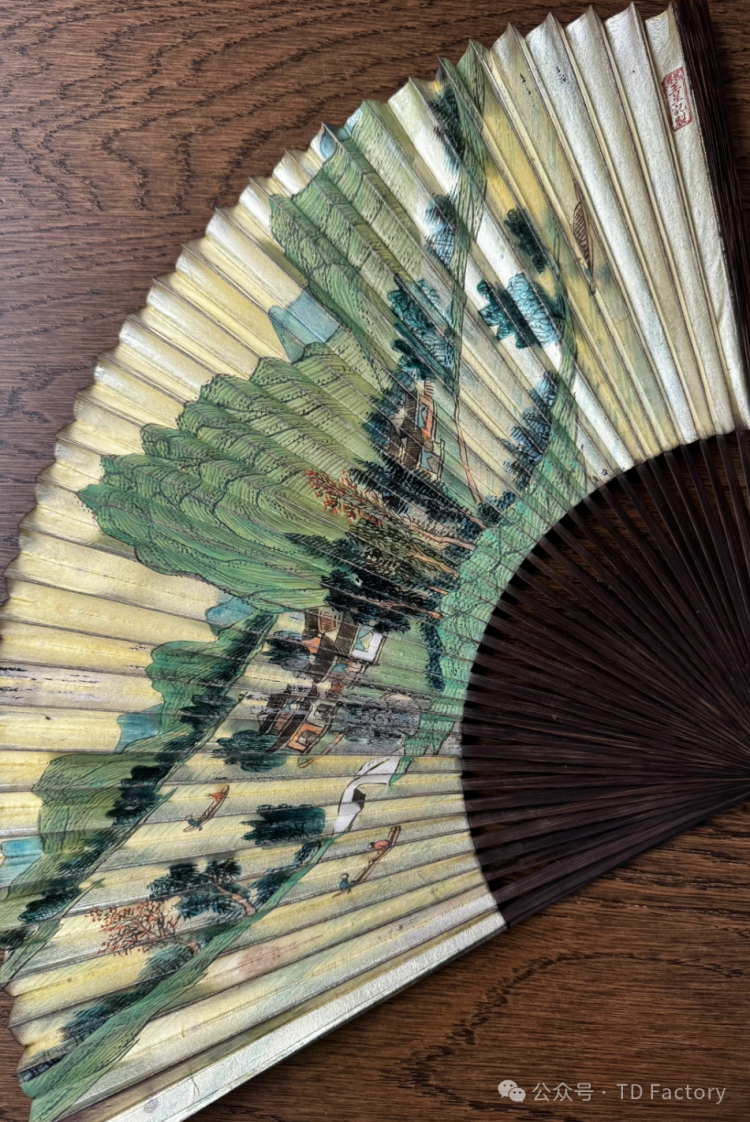
王星记扇庄创建于清光绪元年(1875年)。
老板王星斋,萧山临浦人(时属绍兴府),
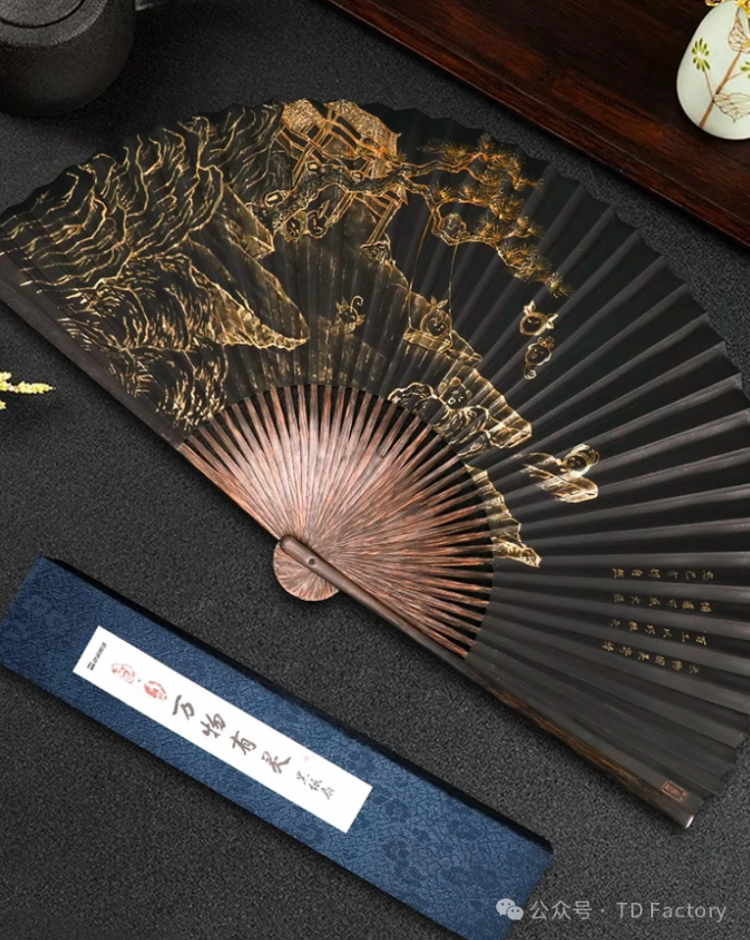
原为祖传制扇手,尤精黑纸扇技艺;
其妻陈英乃纸扇铲贴
(用金银箔镂雕成图案贴于纸面的一种工艺)酒金巧匠。
由于技巧艺高,又善于经营,名气大振,
挤垮了当时杭城较有名气的“舒莲记”扇号,
而登上纸扇霸王宝座。王星斋在杭州、上海、
香港等地开设市部专营纸扇销售,
同时由嫡传高徒章金木在绍兴柯桥开设制扇作坊,
专供外地门市部销售。杭州王星记扇品种齐全。
花色多样,制作精细,用料考究。
大多选用清秀细匀的竹子作骨,以纯桑皮纸为扇面,
采用高山柿漆为的粘料,制作工艺复杂。
如传统产品黑纸扇,需经过86道工序,
100多个制作过程才能完成。
Wang Xingji Fan Village was founded in the first year of the Guangxu reign of the Qing Dynasty (1875).
Boss Wang Xingzhai, from Linpu, Xiaoshan (then part of Shaoxing Prefecture),
Originally, a fan maker passed down from ancestors, particularly skilled in black paper fan techniques.
His wife Chen Yingnai's paper fan, shovel sticker
A craft of carving patterns with gold and silver foil and pasting them on paper.
Due to his high skills and expertise in management, his fame has greatly increased,
Squeezing the well-known "Shulian Ji" fan account in Hangzhou at that time,
And ascend to the throne of Paper Fan Overlord. Wang Xingzhai is in Hangzhou, Shanghai
Hong Kong and other places have established specialised sales departments for paper fans,
At the same time, Zhang Jinmu, a legitimate disciple, established a fan-making workshop in Keqiao, Shaoxing,
Especially for sales at out-of-town retail stores. Hangzhou Wangxingji fan has a complete range of varieties.
Diverse colours, finely crafted, and carefully selected materials.
Most of them use delicate and even bamboo as the bone, and pure mulberry paper as the fan surface,
The adhesive material used is high mountain persimmon lacquer, and the production process is complex.
Traditional products, such as black paper fans, require 86 processes
It takes over 100 production processes to complete.

————————————————
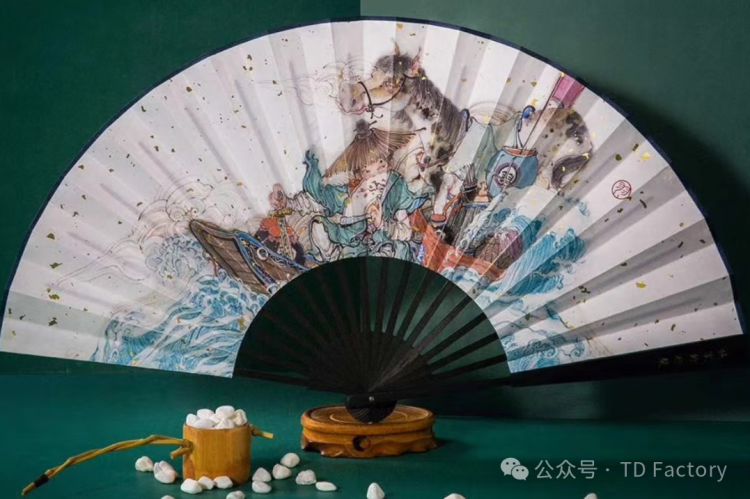
商代即已出现以长尾雉鸡羽毛制成的羽毛扇。、
汉代,宫廷流行绢扇,又称“宫扇”。
东晋时期,葵扇开始流行。
南宋时期,都城杭州成为折扇中心,
河坊街附近的扇子巷即当年扇业作坊聚集之地。
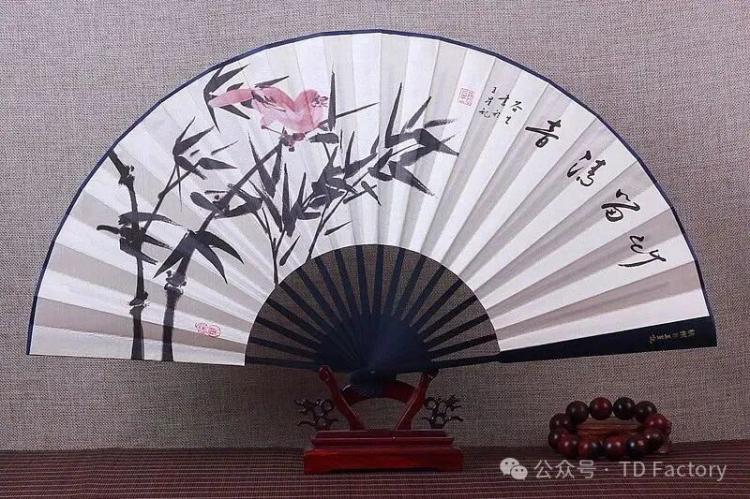
折扇古称“折叠扇”,又称“撒扇”,收则折叠,
用则撒开,撒开后扇面成半规(圆)形,
聚头聚尾,故又称“聚头扇”。
今杭州清泰街与河坊街之间集中了许多杭扇制作工场,
彼此相连,长达二里,此处因而得名“扇子巷”。
明代永乐年间,苏州成为折扇中心,
出现了李昭、马勋等闻名海内的制扇名家。
清代光绪元年(1875),王星斋在杭州扇子巷创建王星记扇庄,凭借精良的做工和独特的工艺在众多店家中脱颖而出,
经过不断发展,王星记扇终于成为杭扇的代表。
清代,黑纸扇即作为杭州特产进贡宫廷,有“贡扇”之称。
Feather fans made from the feathers of long-tailed pheasants already appeared in the Shang Dynasty. 、
During the Han Dynasty, silk fans, also known as "palace fans," were popular in the imperial court.
During the Eastern Jin Dynasty, sunflower fans became popular.
During the Southern Song Dynasty, the capital city of Hangzhou became the centre of folding fans,
The Fan Lane near Hefang Street was once the gathering place for fan workshops.
Folding fan, formerly known as "folding fan" or "scattering fan", folds when folded,
Spread it out, and after spreading it out, the fan will form a semi-circular (circular) shape,
Gathering heads and tails, hence also known as the "gathering head fan".
There are many fan-making factories concentrated between Qingtai Street and Hefang Street in Hangzhou today.
Connected for two miles, this place is named "Fan Lane".
During the Yongle period of the Ming Dynasty, Suzhou became the centre of folding fans,
Famous fan makers such as Li Zhao and Ma Xun emerged in China.
In the first year of the Guangxu reign of the Qing Dynasty (1875), Wang Xingzhai founded Wang Xingji Fan Village in Fan Lane, Hangzhou. With its excellent craftsmanship and unique craftsmanship, it stood out among many shops,
After continuous development, Wang Xingji's fan finally became the representative of Hangzhou fans.
In the Qing Dynasty, black paper fans were presented as a tribute to the court as a speciality of Hangzhou, and were known as "tribute fans".
————————————————
工艺
一、选材
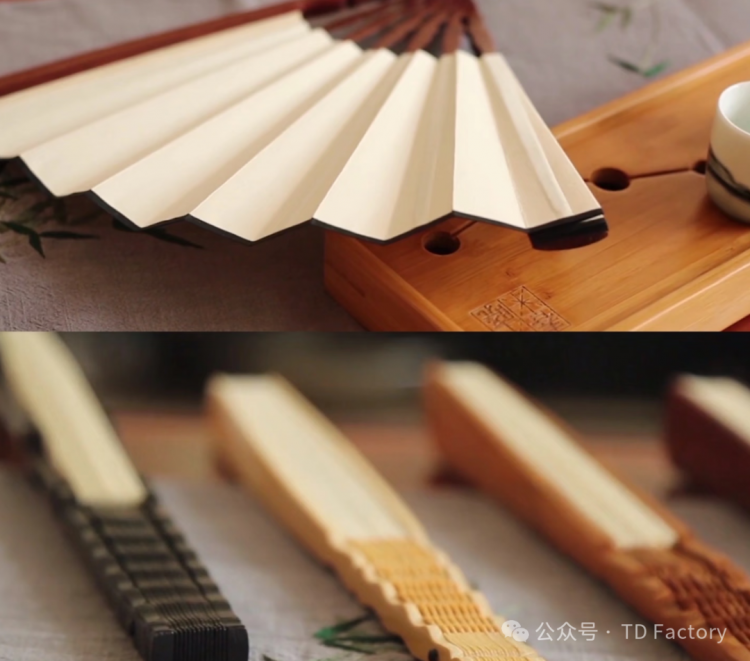
较好的黑纸扇在制作扇骨时所用的
材料系广西特产的野生棕竹。
选材时要考虑棕竹的生长时间,时间过短缺少天然花纹,
一般选取2.5厘米直径的棕竹。
这种野生棕竹富有天然的弱软性和弹性,
用此材料制作的扇子美观实用。据介绍,
王星记每年都会去采购一次棕竹。
黑纸扇的扇面采用浙江天目山所产的纯桑皮纸为原料。
其纸质地绵韧,不易断裂,经久耐用。
扇面的两面需涂刷几层诸暨产的高山柿漆。
用这种漆涂刷过的桑皮纸扇面,光泽照人,不怕水蚀。
柿漆也要自己制作,要选取未熟的柿子将其碾碎、发酵而成。
销钉是用水牛角制作而成。水牛角韧性好,不易断裂。
销钉完全是手工制成,要将牛角锯开,
制成方形,再用水煮,
然后在一块带孔的钢板上一遍一遍地刮,直到刮成圆形。
王星记当下基本不再做销钉,而是直接订货收购。
1、 Material selection
The better black paper fan used in making fan bones
The material is wild brown bamboo, a specialty of Guangxi.
When selecting materials, the growth time of brown bamboo should be considered. If the time is too short, it will lack natural patterns,
Generally, brown bamboo with a diameter of 2.5 centimeters is selected.
This wild brown bamboo is rich in natural softness and elasticity,
The fan made of this material is beautiful and practical. According to the introduction,
Wang Xingji purchases brown bamboo once a year.
The fan surface of the black paper fan is made of pure mulberry bark paper produced in Tianmushan, Zhejiang Province.
Its paper is smooth and tough, not easy to break, and durable.
The two sides of the fan need to be coated with several layers of Zhuji-produced high mountain persimmon paint.
The mulberry paper fan surface coated with this paint has a glossy appearance and is not afraid of water erosion.
Persimmon lacquer also needs to be made by oneself, selecting unripe persimmons to crush and ferment them.
The pin is made of water buffalo horn. Water buffalo horn has good toughness and is not easy to break.
The pin is entirely handmade and requires sawing open the cow horn.
Make it into a square shape, then boil it in water,
Then scrape over and over again on a perforated steel plate until it becomes circular.
Currently, Wang Xingji is basically no longer making dowels, but directly ordering and purchasing.

二、制作
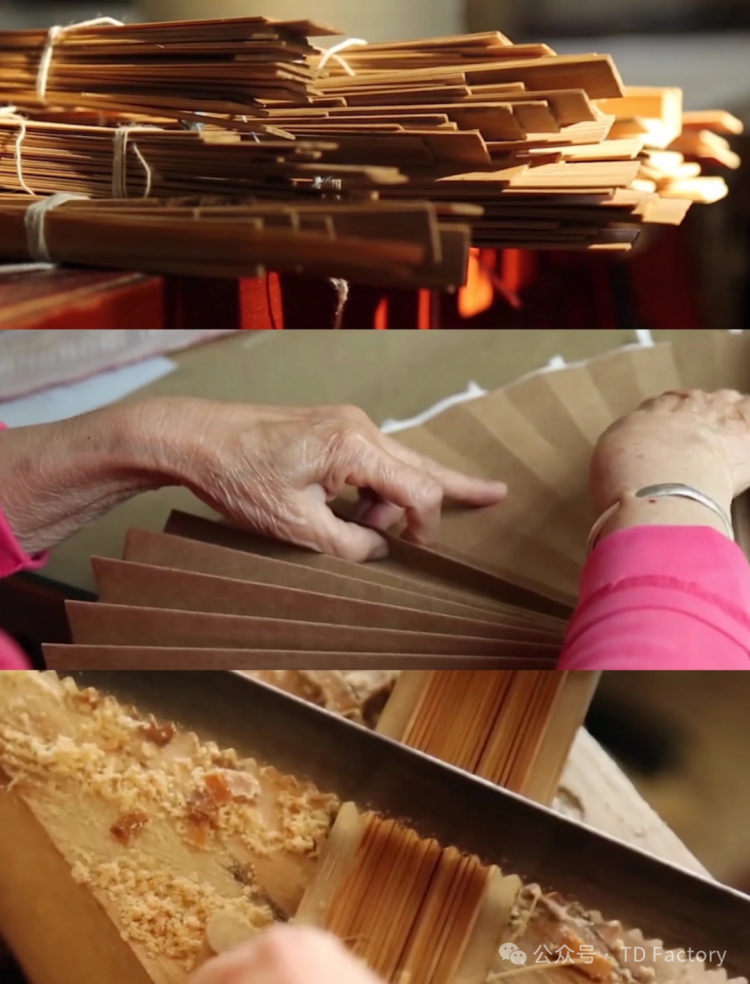
断料:
按照合理取材、避免浪费的原则,
根据原料的尺寸来截取不同的长度。
截取程由人工用锯子将其锯成所需的尺寸。
开料(劈篾):
将断好的棕竹劈到所需的宽度(棕竹的直径决定扇骨的宽度,扇骨一舟分为1.5厘米、2.0厘米等几种规格)。
一般一节棕竹可以出6片扇骨。
削料(削篾):
需用专门的扇刀将锯好的棕竹削成片型,即制成竹骨片。
浸竹骨片:将竹骨片放入专门的缸中浸泡。
烧灰道(蒸竹骨片):
将浸好的竹骨片晒干,
把晒好的骨片与生石灰和篾料放在锅中煮6小时以上。
烙料:
先将烙料准备好,然后用烙料将篾片烫直。
编排竹骨片:将处理好的竹骨片放在一起,由专人负责编排。主要是挑花色和去除残次。把花色一致的篾片编号排列整齐放在一起。黑纸扇扇骨有24笳、3笳、40笳、
60笳数种(笳为扇骨计量单位),笳数越多竹骨片越薄,
制作要求也越高。
打洞:
把编排好的竹骨片用专用工具打洞,用竹钉串好。
锉扇头:
将成型的扇骨用扇刀切好扇头,之后用锉刀锉圆扇头。
2、 Production
Cut off material:
Following the principle of reasonable material selection and avoiding waste,
Cut to different lengths according to the size of the raw materials.
The cutting process is manually sawn into the required size using a saw.
Cutting (splitting bamboo strips):
Chop the broken brown bamboo to the desired width (the diameter of the brown bamboo determines the width of the fan bone, which can be divided into several specifications, such as 1.5 centimetres and 2.0 centimetres per boat).
Generally, one section of brown bamboo can produce 6 fan bones.
Cutting materials (cutting strips):
A specialised blade is needed to cut the sawn brown bamboo into pieces, which are then made into bamboo bone pieces.
Soak bamboo bone slices: Soak bamboo bone slices in a specialised tank.
Burning ash path (steaming bamboo bone slices):
Sun-dry the soaked bamboo bone slices,
Boil the sun-dried bone slices with quicklime and bamboo strips in a pot for at least 6 hours.
Ingredients:
Prepare the branding material first, and then use it to straighten the bamboo strips.
Arranging bamboo bone slices: Place the processed bamboo bone slices together and assign a dedicated person to arrange them. Mainly selecting colours and removing defects. Arrange the bamboo strips with consistent colour codes neatly together. The black paper fan has 24, 3, and 40 fan bones.
There are several types of bamboo bones, with 60 types (where "jia" is the unit of measurement for fan bones). The more "jia" there are, the thinner the bamboo bone slices,
The higher the production requirements.
Hole drilling:
Drill holes in the arranged bamboo bones using specialised tools and string them with bamboo nails.
File fan head:
Cut the formed fan bone into the fan head with a fan knife, and then file the fan head round with a file.


胖料:
对已削好的篾片进行刀痕,即去除开料时留下的痕迹,
使其平滑。再将篾片留有的石灰粉胖掉。
在这一过程中艺人要完全凭经验掌握篾片的厚度,
且要求每片篾片厚度均匀。
探骨:
这一工序分A、B两道工序,
分别为探纸口和纸口的上面,使宽度合标准宽度要求。
检骨:对已基本完成的扇骨进行检验,
确认图案花色一致,扇骨平滑且平直无残次。
糊面:
将裁好的桑皮纸糊到扇骨上。扇面要糊三层桑皮纸。
分距:用专业工具锡嵌(此工具为半圆形)将各个不同笳数的扇骨等分,每根扇骨之间距离相等。
摺面(摺裥):
手工将糊好的扇子摺成一裥一裥的。
在折的过程中要注意摺平、挑平摺齐等。
挑裥:
用铜手指甲(专业工具)挑裥,
目的是为了将摺面时没有摺平的扇面挑平,
使扇面的前后平整。
定型:
艺人将这道工序称为打腰封定型。
将已积好的扇面用纸条扎平、扎紧,使扇面定型。
上色:
用准备好的高山柿漆涂刷扇面的两面,反复几次,晾干。
Fat material:
Make knife marks on the already cut bamboo strips, that is, remove the marks left during cutting.
Make it smooth. Then, make the lime powder left by the bamboo strips fat off.
During this process, the artist must rely entirely on experience to master the thickness of the bamboo strips,
And it is required that the thickness of each strip be uniform.
Bone exploration:
This process is divided into two steps, A and B.
Make the width of the paper probe and the top of the paper probe meet the standard width requirements.
Bone examination: Inspect the fan bones that have been basically completed,
Confirm that the pattern and colour are consistent, and the ribs are smooth and straight without any defects.
Pasted noodles:
Paste the cut mulberry paper onto the fan bones. The fan surface needs to be covered with three layers of mulberry paper.
Spacing: Use a professional tool called tin inlay (this tool is semi-circular) to divide the fan bones of different numbers equally, with equal distances between each fan bone.
Folding (folding):
Hand-fold the pasted fan into pleats.
During the folding process, it is important to pay attention to flattening, aligning, and flattening the folds.
Picking pleats:
Use copper fingernails (professional tools) to gather,
The purpose is to flatten the fan surface that was not folded flat during folding.
Make the front and back of the fan flat.
Stereotyping:
Artists refer to this process as shaping waistbands.
Tie the accumulated fan surface flat and tightly with paper strips to shape the fan surface.
Coloring:
Brush both sides of the fan with the prepared high mountain persimmon paint, repeat several times, and air dry.
Sun-dry the soaked bamboo bone slices,

刮沙:
用砂纸将染到扇骨上的颜色去掉。
染到扇骨两侧小棱上的颜色要用木节草(一种植物)打磨、
去颜色。
修扇:
这一工序分两部分,即修骨架子和扇面。
经过这么多道工序扇子基本完成,
但在制作过程中可能会造成破损,
就要在这道工序中进行修补。
撩扇:
在制作扇面时,要将扇面的上边做长。
这一工序就是要齐平扇子,并且要严条,即给扇子包边,
使扇子整齐。还要将扇边磨圆。
粘边:
将扇面的两边与扇骨的大边粘牢。
换钉:
把竹节换成牛角钉并钳好。
成品检验:
在所有工序完成后,还要由专人负责进行检验。
这时检验人员会根据扇骨、
扇面及整扇的制作将其分成不同的等级,去除残次。
将分好等级的扇子交给下一道工作人员。
到此,一把完整的黑纸扇基本完成,
下一道工序就是扇面的装饰。
扇面的装饰也是显示扇子的品味和价值的关键所在。
一把好的扇子不仅制作工艺精细而且其装饰更为讲究。
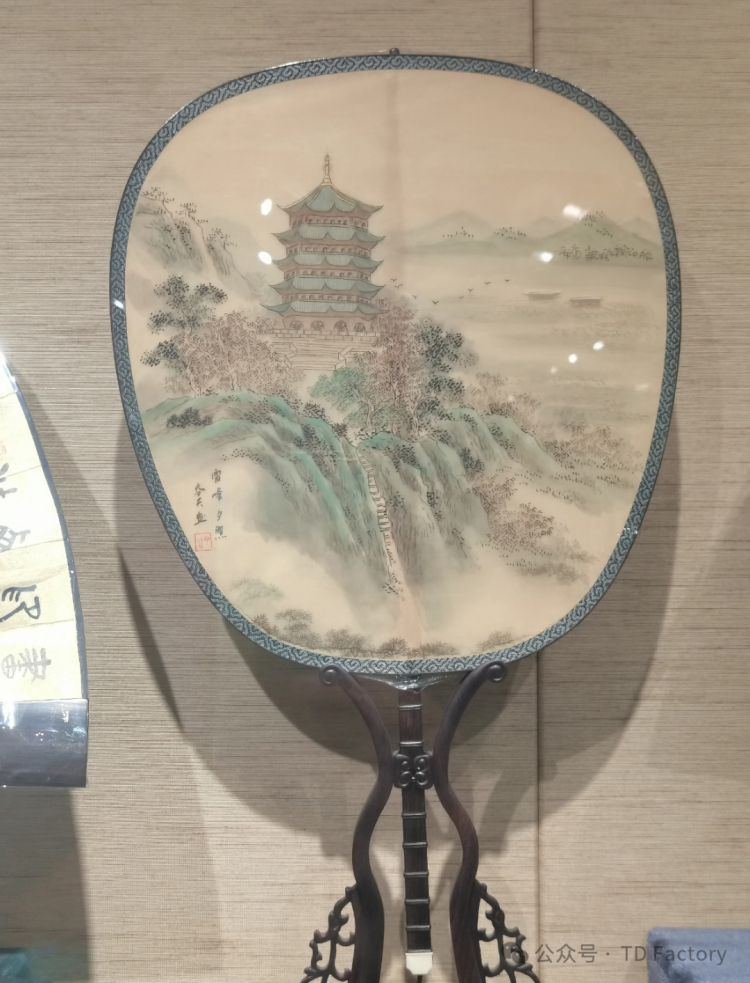
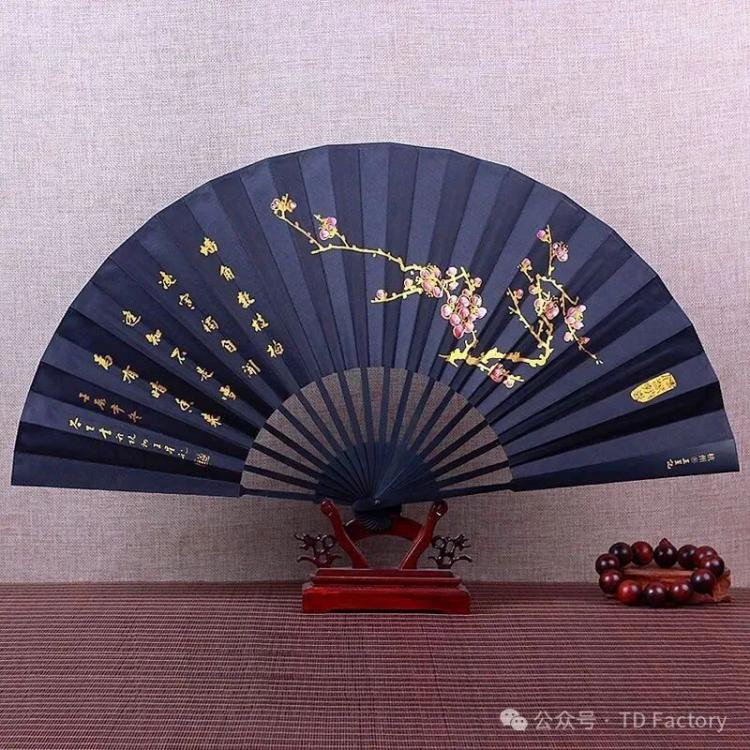
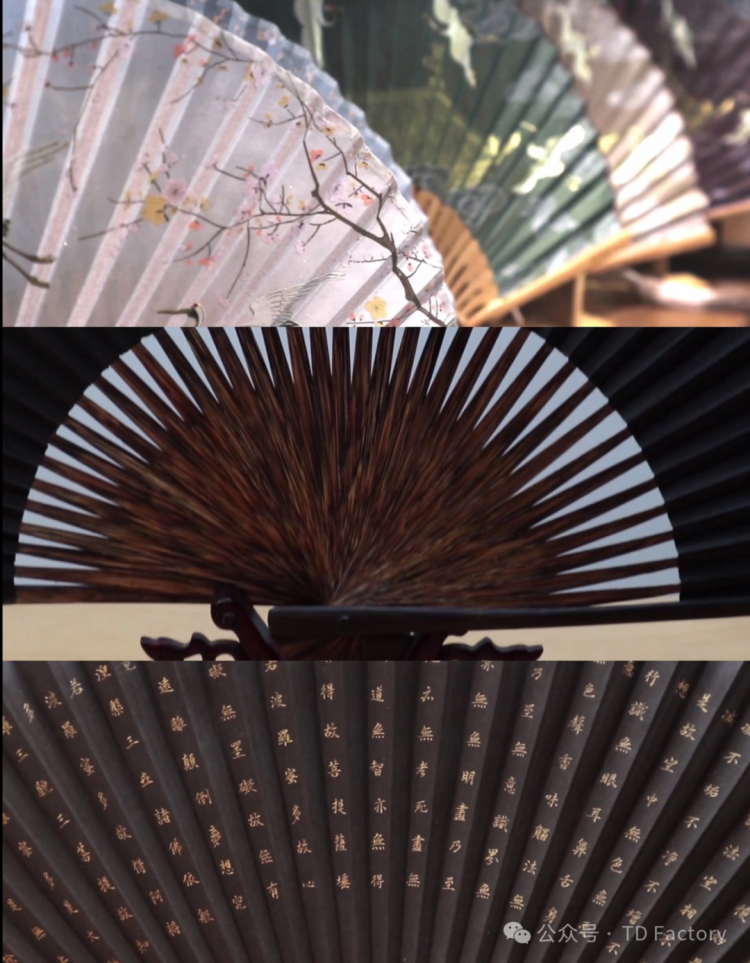
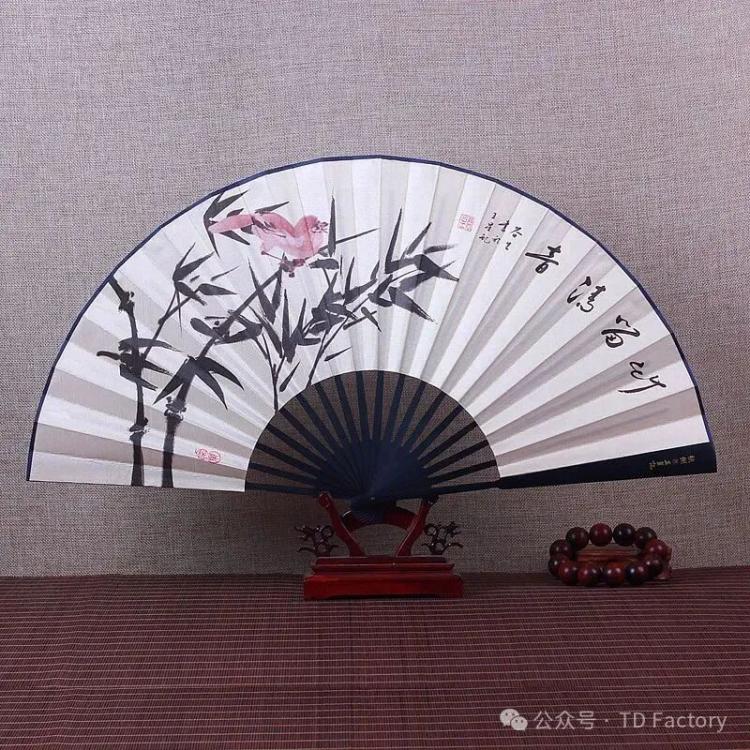
扇面的装饰工艺分为泥金、泥银、剪贴、绘画、书法等多种形式。
Scraping sand:
Use sandpaper to remove the colour stain from the fan bones.
The colour that stains the small edges on both sides of the fan bone should be polished with knotweed (a plant)
Go colour.
Fan repair:
This process is divided into two parts, namely the bone repair frame and the fan.
After so many processes, the fan is basically completed,
But it may cause damage during the production process,
Repairs need to be carried out in this process.
Lift the fan:
When making a fan, the top of the fan should be made longer.
This process is to level the fan and be strict, that is, to wrap the edges of the fan.
Make the fan neat. Also, round the edges of the fan.
Adhesive edge:
Stick the two sides of the fan firmly to the large edge of the fan bone.
Nail replacement:
Replace the bamboo nodes with cow horn nails and clamp them in place.
Finished product inspection:
After all processes are completed, a dedicated person is responsible for conducting inspections.
At this point, the inspection personnel will use the fan bone
The production of the fan surface and the entire fan will be divided into different levels to remove defects.
Hand over the graded fans to the next staff member.
At this point, a complete black paper fan is basically completed,
The next step is the decoration of the fan surface.
The decoration of the fan surface is also the key to displaying the taste and value of the fan.
A good fan is not only made with exquisite craftsmanship, but also decorated with more attention to detail.
The decorative techniques of fans can be divided into various forms, such as mud gold, mud silver, cutting and pasting, painting, calligraphy, etc.

————————————————


王星记扇品种繁多,达 19 大类 10000 多个花式,
主要包括黑纸扇、檀香扇、香木扇、白纸扇、绢扇、装饰扇、舞扇等十五大类。
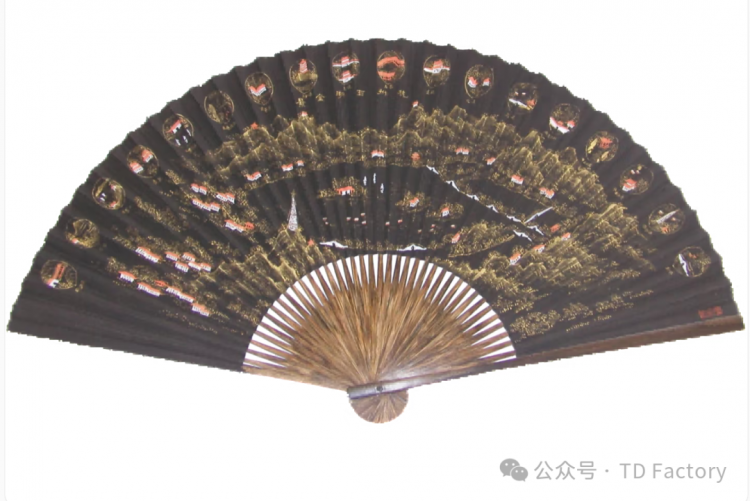
黑纸扇:
是王星记最负盛名的传统名牌,有 “一把扇子半把伞” 的美称。扇面采用临安于潜桑皮纸、诸暨柿漆、福建建煤等原料,
经 86 道工序精制而成,能经受烈日晒、冷水泡、
沸水煮各 10 多个小时,不折不裂,平整如初,
既可拂暑取凉,又可遮阳蔽雨。
檀香扇:
扇面和扇骨都用檀香木制成,扇存香存,保存十年八年,
扇起来仍清香阵阵。制作需 38 道工序,
其中拉花环节最难,
需用 0.3 丝的钢丝在扇面上拉出上万个小孔组成精美镂空图案。
其他品种:
还有高雅端庄的白纸扇、隽秀美丽的细绢扇、
气度非凡的挂扇、婀娜多姿的绸舞扇、
价廉物美的香木扇等,各有特色。
Wang Xingji has a wide variety of fans, with over 10000 styles in 19 major categories.
It mainly includes fifteen categories: black paper fan, sandalwood fan, fragrant wood fan, white paper fan, silk fan, decorative fan, dance fan, etc.
Black paper fan:
It is the most famous traditional brand of Wangxingji, known as "one fan and half umbrella". The fan is made of materials such as Lin'an Yuqian mulberry bark paper, Zhuji persimmon lacquer, Fujian construction coal, etc.
It is refined through 86 processes and can withstand strong sunlight, cold water soaking.
Boil in boiling water for more than 10 hours each, without folding or cracking, and remain smooth as before.
It can both cool down and provide shade from the sun and rain.
Sandalwood fan:
The fan face and fan bones are made of sandalwood, and the fan preserves fragrance for ten to eight years.
The fragrance still lingers when fanned. The production requires 38 processes,
The flower pulling process is the most difficult,
Use a 0.3 wire to pull out tens of thousands of small holes on the fan surface to form a beautiful hollow pattern.
Other varieties:
There are also elegant and dignified white paper fans, graceful and beautiful fine silk fans
Extraordinary hanging fans, graceful silk dancing fans
Affordable and high-quality fragrant wood fans, each with its own characteristics.

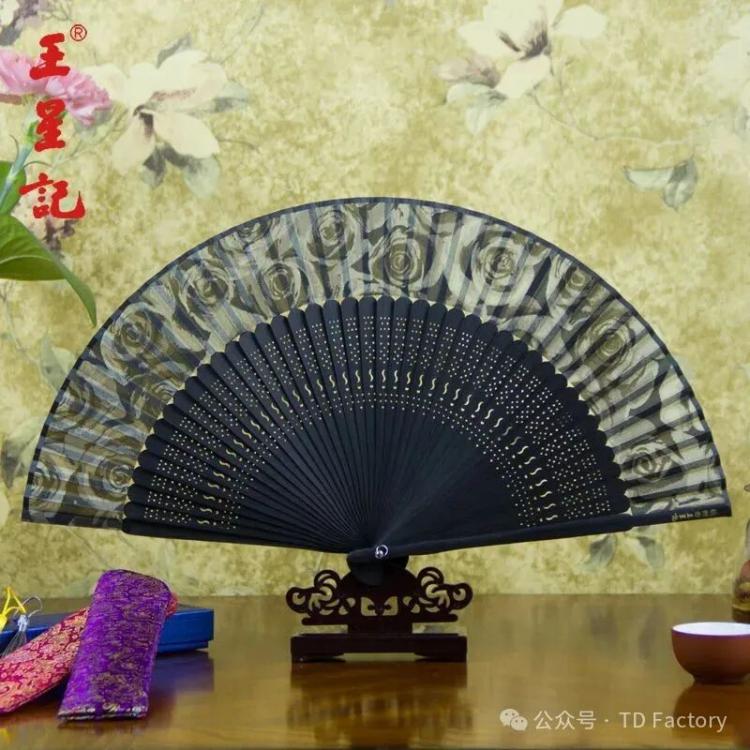
王星记的扇子是中国较为盛名的传统扇子,有“贡扇”之誉。
其扇子选料考究、做工精细,分为十大类,
包括黑纸折扇、檀香扇、竹骨扇、绢扇、象牙扇、戏剧扇、
舞蹈扇等400多个品种,1300多种花色。
王星记的扇子制作工艺复杂,
一把黑纸扇一般需要经过86道工序才能支撑,
而其生产的黑纸扇不仅可以扇风取凉,
还能遮阳蔽日,有“半把伞”之称。
Wang Xingji's fan is a well-known traditional fan in China, known as the "tribute fan".
Its fans are carefully selected for materials and finely crafted, divided into ten categories,
Including black paper folding fan, sandalwood fan, bamboo bone fan, silk fan, ivory fan, drama fan
There are over 400 varieties of dance fans and more than 1300 different colours.
Wang Xingji's fan production process is complex,
A black paper fan usually requires 86 processes to support,
And the black paper fan it produces can not only cool the air,
It can also provide shade from the sun and is known as the 'half umbrella'.

————————————————
历史文化传承:
王星记扇制作技艺世代相传,是中国扇文化的重要代表,
承载着百年的历史底蕴和传统工艺秘笈,
2008 年被列入国家级非物质文化遗产代表性项目名录。
艺术价值提升:
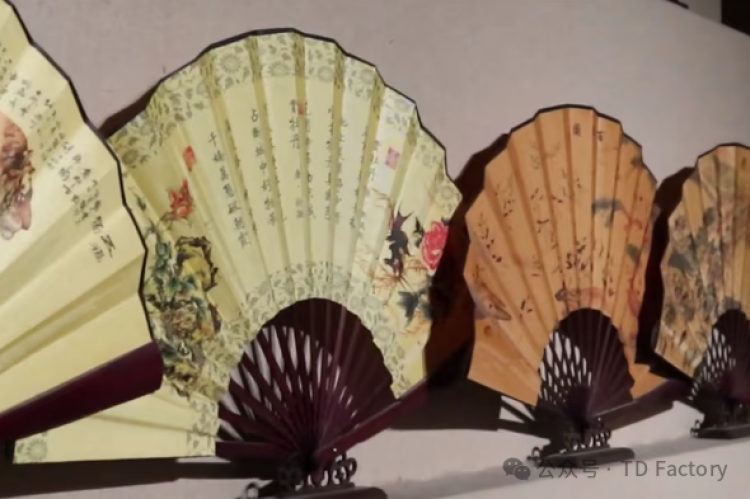
通过与多种艺术形式结合,提升了扇子的艺术品位,
历代众多书画名家在其扇面上留下杰作,
使其成为兼具实用与艺术价值的工艺品15。
文化交流桥梁:
王星记扇常被用作国礼赠*送给国际友人,
也为各地博物馆所收藏,在中外文化交流中发挥了重要作用。
地域文化象征:
与浙江丝绸、龙井茶并称 “杭产三绝”,
是杭州地域文化的重要象征,
体现了杭州的传统工艺特色和文化底蕴。
Heritage of History and Culture:
Wang Xingji's fan-making skills have been passed down from generation to generation and are an important representative of Chinese fan culture.
Carrying a hundred years of historical heritage and traditional craftsmanship secrets,
In 2008, it was listed as a representative project of national intangible cultural heritage.
Enhancing artistic value:
By combining with various art forms, the artistic taste of fans has been enhanced,
Numerous renowned calligraphers and painters throughout history have left masterpieces for their fans,
Make it a handicraft that combines practicality and artistic value.
Cultural Exchange Bridge:
Wang Xingji fan is often used as a national gift to give to international friends.
It has also been collected by museums around the world and played an important role in cultural exchanges between China and foreign countries.
Regional cultural symbols:
Along with Zhejiang silk and Longjing tea, it is known as one of the "Three Wonders of Hangzhou Production",
It is an important symbol of Hangzhou's regional culture,
It embodies the traditional craftsmanship and cultural heritage of Hangzhou.
————————————————
王星记扇的每一代传人,都像这把扇子一样,坚韧而顽强,
他们用心血打磨技艺,用智慧传承文化。
无论是制扇时的细致入微,还是创新时的大胆尝试,
他们都坚守如初,从未放弃。
如今,王星记扇依旧保持着手工制作的温情,
每一把扇子都是匠人精神的传承,
每一次开合都是对经典的致敬。
然而,王星记扇的传承之路并非一帆风顺。
在现代工业的冲击下,传统制扇业面临着前所未有的挑战。
但王星记扇并未停滞不前,而是积极融入数字化的浪潮。
通过文创发展特色道路,王星记扇打通行业壁垒,
加强跨界合作,营造技艺传承、创新发展的环境氛围。
Every generation of descendants of Wang Xingji fans is as resilient and tenacious as this fan.
They refine their skills with hard work and inherit the culture with wisdom.
Whether it's the meticulousness in fan making or the bold experimentation in innovation,
They remained steadfast and never gave up.
Nowadays, Wang Xingji fans still maintain the warmth of handmade craftsmanship,
Every fan is the inheritance of the craftsman's spirit,
Every opening and closing is a tribute to the classic.
However, the path of inheriting Wang Xingji fans has not been smooth sailing.
Under the impact of modern industry, the traditional fan industry is facing unprecedented challenges.
But Wang Xingji Fan has not stagnated, but actively integrated into the wave of digitalisation.
Through the characteristic path of cultural and creative development, Wang Xingji Fan has broken down industry barriers,
Strengthen cross-border cooperation and create an environment for skill inheritance and innovative development.

王星记扇,
不仅是一件艺术品,更是一个活的非遗文化展示,
一个制扇文化交流的平台。
王星记扇的故事,就像那些被岁月磨砺的扇骨,
虽然历经沧桑,却依旧坚韧如初。在每一次开合中,
我们都能感受到那份来自百年前人类的智慧与情感,
那是文明的回声,也是时代的心跳。
尽管面临着品牌老化、缺乏创新和渠道单一等问题,
王星记扇仍在努力寻求创新与发展,
以保持品牌的竞争力和生命力。
王星记扇,一柄扇子,一段历史,一份传承。
Wang Xingji Fan,
Not only a work of art, but also a living display of intangible cultural heritage,
A platform for cultural exchange in fan making.
The story of Wang Xingji's fan is like those fan bones honed by time,
Although it has gone through many vicissitudes, it remains as resilient as ever. In every opening and closing,
We can all feel the wisdom and emotions of humanity from a hundred years ago,
That is the echo of civilisation and the heartbeat of the times.
Despite facing issues such as brand ageing, a lack of innovation, and a single channel,
Wang Xingji Fan is still striving for innovation and development,
To maintain the competitiveness and vitality of the brand.
Wang Xingji Fan, a fan, a history, a legacy.
版权声明:【除原创作品外,本平台所使用的文章、图片、视频及音乐属于原权利人所有,因客观原因,或会存在不当使用的情况,如,部分文章或文章部分引用内容未能及时与原作者取得联系,或作者名称及原始出处标注错误等情况,非恶意侵犯原权利人相关权益,敬请相关权利人谅解并与我们联系及时处理,共同维护良好的网络创作环境,联系邮箱:603971995@qq.com】