

Part 1
当一根细铜丝弯出梅枝的弧度,一缕彩线在指尖缠绕出花瓣的肌理,这朵不会凋谢的“花”便承载了千年的巧思——它就是被誉为“立体刺绣”的非遗缠花。这项发源于中国民间的传统手工艺,以其纤巧雅致的姿态,在时光长河中静静绽放
When a thin copper wire is bent into the curvature of a plum branch, and a strand of colored thread is twisted between the fingertips to form the texture of petals, this "flower" that never fades carries with it the ingenuity of a thousand years — it is the intangible cultural heritage of Chanhua, known as "three-dimensional embroidery". Originating from Chinese folk traditional craftsmanship, it blooms quietly in the long river of time with its delicate and elegant posture.
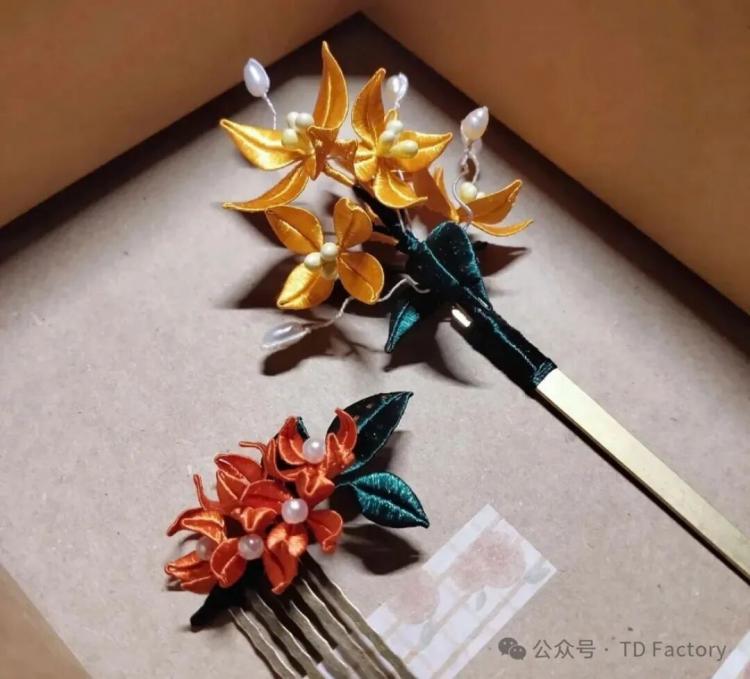
缠花于2011年被收录为非遗。2011年6月,“英山缠花”被湖北省人民政府公布为湖北省第三批省级非物质文化遗产名录。此外,2022年9月,金坛手工缠花入选金坛区第七批区级非物质文化遗产名录。
Chanhuā was included in the UNESCO Intangible Cultural Heritage List in 2011. In June 2011, "Yingshan Chanhuā" was listed in the third batch of provincial intangible cultural heritage by the People's Government of Hubei Province. Additionally, in September 2022, the Jintan manual Chanhuā was included in the seventh batch of district-level intangible cultural heritage in Jintan District.
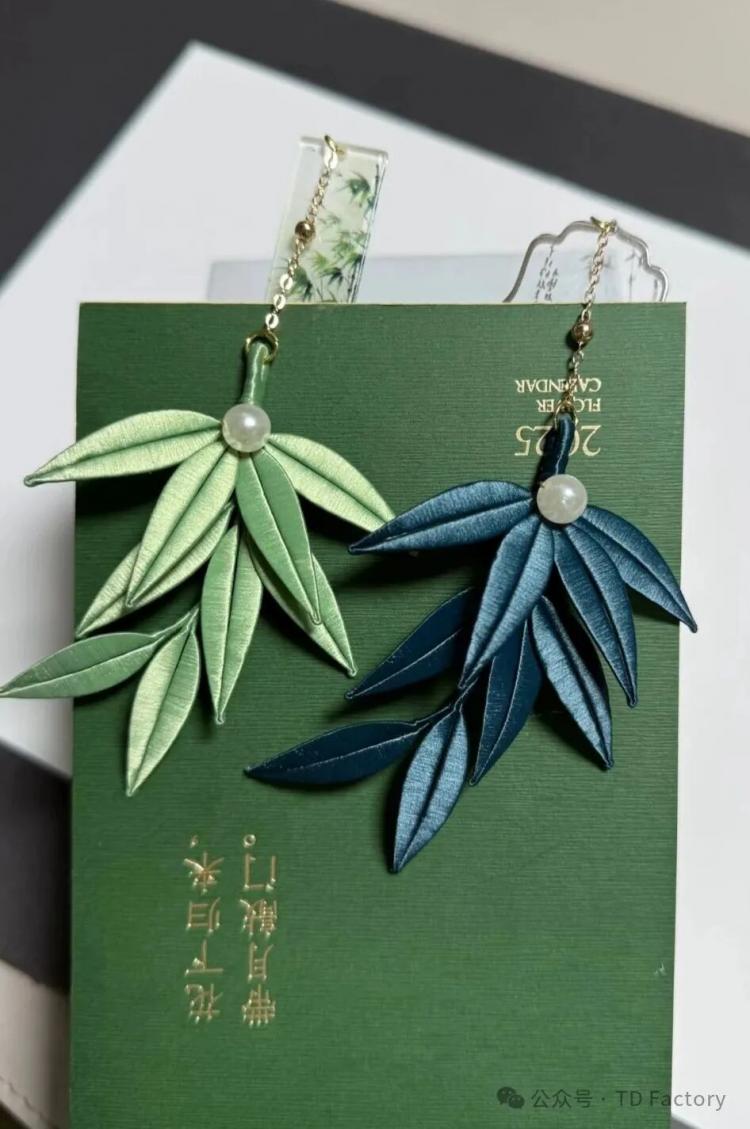
缠花的历史可追溯至明代,最早是民间女子簪发的饰物。在物质匮乏的年代,聪慧的古人用随处可见的铜丝、彩线,模仿自然界的花草形态,将对生活的热爱编织进方寸之间。到了清代,缠花工艺日趋成熟,不仅成为闺阁女子的心头好,更作为贡品走进宫廷,纹样也从简单的单朵花发展为寓意吉祥的“福在眼前”“喜上眉梢”等组合图案。
The history of the coiled flower can be traced back to the Ming Dynasty, when it was initially a hair accessory for women in the folk. In the era of material scarcity, the wise ancients used copper wires and colourful threads that were readily available to imitate the shapes of flowers and plants in nature, weaving their love for life into small spaces. By the Qing Dynasty, the coiled flower craft had become increasingly mature. It not only became a favourite among women in the boudoir but also entered the imperial court as a tribute. The patterns evolved from simple single flowers to combinations with auspicious meanings such as "Happiness Right Before Your Eyes" and "Joy on the Tip of the Eyebrow".
Part 2
一根线的修行:缠花制作过程
1.备料:选取柔韧性好的黄铜丝或铁丝,剪成不同长度备用;彩线则多用水溶线、丝线或棉线,根据图案需要搭配出渐变或撞色效果。
2.掐型:用镊子将铜丝弯成花瓣、叶片、花蕊等基础形状,弧度的大小直接决定成品的灵动度,比如梅花瓣需尖俏,牡丹瓣则要圆润。
3.打底:将一根线固定在铜丝骨架的一端,顺着轮廓缠绕,每一圈都要紧密贴合,不能留有缝隙,这一步是为了让骨架更牢固,也方便后续缠出花纹。
1. Preparation of materials: Select flexible brass wires or iron wires and cut them into pieces of different lengths for later use; for colored threads, water-soluble threads, silk threads or cotton threads are mostly used, and gradient or contrasting colour effects are created according to the needs of the pattern.
2. Pinching: Use tweezers to bend the copper wire into petals, leaves, stamens and other basic shapes. The size of the arc directly determines the flexibility of the finished product, such as plum petals need to be sharp, and peony petals should be rounded.
3. Priming: Fix a wire at one end of the copper wire skeleton, wrap along the contour, each circle must be tightly fitted, and there can be no gaps. This step is to make the skeleton firmer, and it is also convenient for the subsequent winding of the pattern.
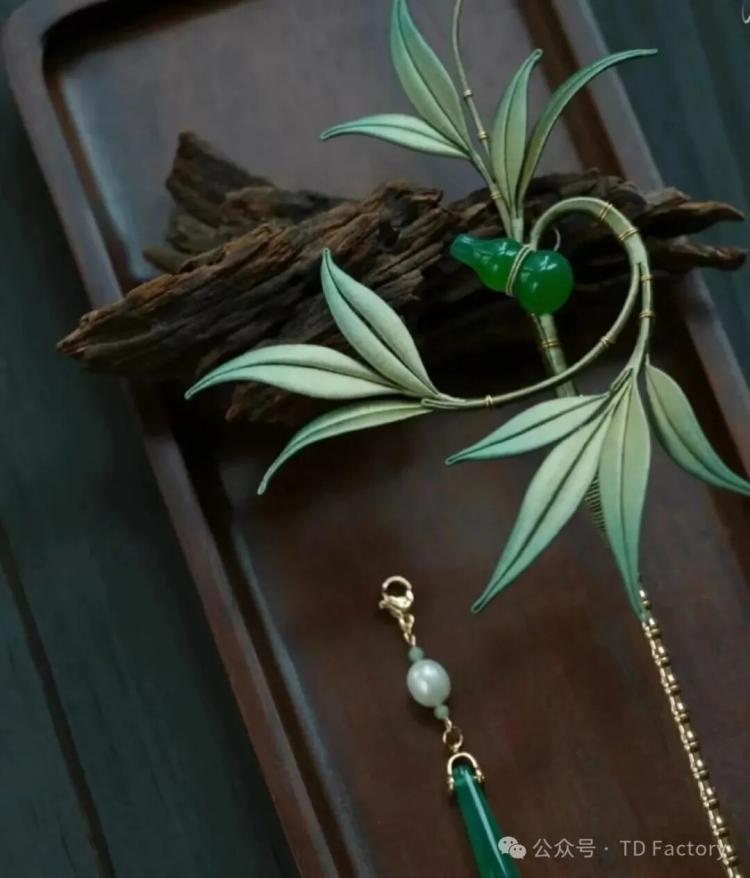
4.缠纹:这是最具创意的环节。通过改变缠线的角度和密度,可以做出“斜纹”“回纹”“鱼鳞纹”等不同肌理。比如缠制莲花瓣时,用斜线模拟花瓣的脉络;做叶片时,中间留一道空隙当作叶脉,瞬间让叶片有了立体感。
5.组装:将缠好的花瓣、叶片按设计好的形态组合,用线或胶水固定。一朵完整的缠花往往需要十几片甚至几十片部件,比如一朵牡丹,光花瓣就有内层的圆瓣、外层的尖瓣,层层叠叠才能显出雍容。
6.定型:部分复杂作品需要用定型液轻轻喷洒,待干燥后形状更稳固,最后装上簪杆、别针或挂绳,一件缠花作品才算完成。
4. Entanglement: This is the most creative part. By changing the angle and density of the entanglement, different textures such as "twill", "back grain" and "fish scale pattern" can be created. For example, when winding lotus petals, use oblique lines to simulate the veins of the petals; When making leaves, leave a gap in the middle as a leaf vein, which instantly gives the leaf a three-dimensional effect.
5. Assemble: Combine the wrapped petals and leaves according to the designed shape and fix them with thread or glue. A complete entwined flower often requires a dozen or even dozens of parts, such as a peony, the petals alone have an inner layer of round petals, an outer layer of pointed petals, and layers of petals can show grace.
6. Styling: Some complex works need to be gently sprayed with setting liquid, and the shape is more stable after drying. And finally, a hairpin rod, pin or lanyard is installed, and a flower entanglement work is completed.
Part 3
小而美的东方美学:缠花鉴赏之道
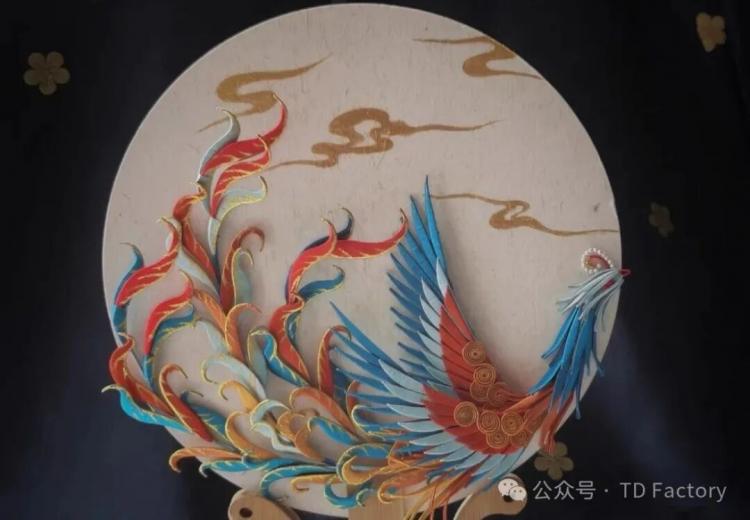
形之趣:好的缠花能精准捕捉花草的神韵。看一朵缠花梅花,花瓣的锐角要带着傲气,枝干的弯曲需藏着苍劲,观一只缠花蝴蝶,翅膀的弧度要似振翅欲飞,触须的纤细得透着灵动。匠人常说“仿物不泥物”,缠花不是简单复制自然,而是提炼形态的精髓,比如将桃花的娇憨、兰花的清雅,用极简的线条呈现。
The charm of form: A well-crafted wrapped flower can precisely capture the essence of flowers and plants. Take a wrapped flower plum blossom as an example. The sharp angles of the petals should convey a sense of pride, and the curves of the branches need to hide a kind of vigour. When observing a wrapped flower butterfly, the arc of the wings should look like it's about to flutter, and the thinness of the antennae must reveal a sense of liveliness. Craftsmen often say, "Imitate objects without being confined by them." Wrapped flowers are not simply a replication of nature but a refinement of the essence of forms. For instance, the coquettishness of peach blossoms and the elegance of orchids are presented with minimalist lines.
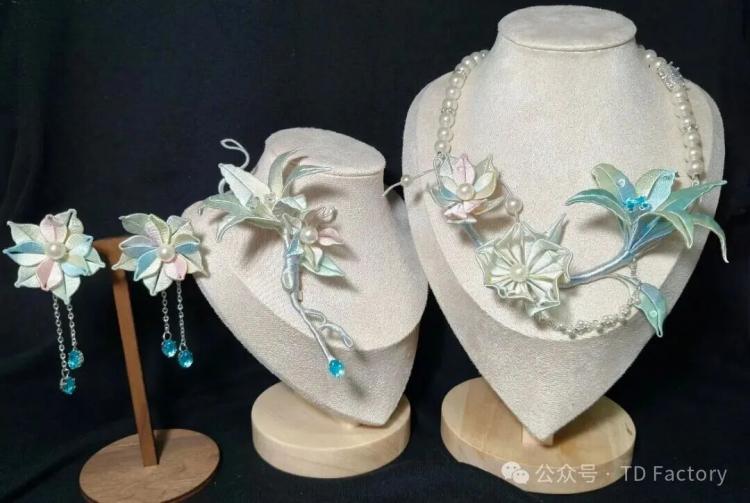
色之韵:缠花的色彩搭配暗藏传统美学密码。节庆时多用红配金,热烈喜庆;日常佩戴则偏爱粉配白、蓝配绿,清新雅致。更妙的是“随类赋彩”,比如用嫩黄缠迎春花,用紫褐表现枯叶,让观者一眼就能联想到对应的物象,色彩虽简,意境却浓。
The charm of colour: The colour combinations of wrapped flowers conceal the secrets of traditional aesthetics. During festivals, red paired with gold is often used, exuding a warm and festive atmosphere. For daily wear, people prefer combinations like pink and white, or blue and green, which are fresh and elegant. What's even more wonderful is the principle of "assigning colours according to the object type". For example, light yellow is used to wrap winter jasmine, and purple - brown is used to represent withered leaves, enabling viewers to instantly associate them with the corresponding objects. Although the colours are simple, the artistic conception is profound.
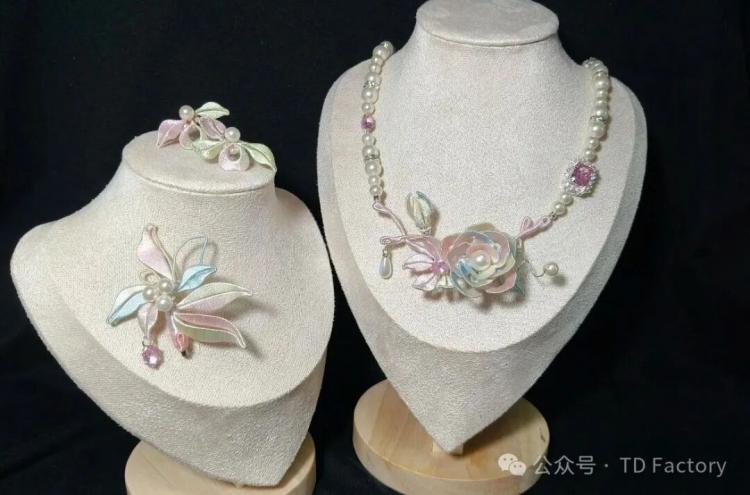
意之深:缠花的纹样往往寄托着美好的寓意。新婚时用“并蒂莲”象征夫妻和睦,祝寿时送“松鹤”寓意长寿,孩童佩戴“葫芦”纹样则期盼健康成长。这些图案如同无声的祝福,让小小的饰物有了情感温度。
The profound meaning: The patterns of wrapped flowers often convey auspicious implications. For a newlywedded couple, the "twin lotus flowers on one stalk" pattern symbolises marital harmony. When congratulating someone on their birthday, the pattern of "pine trees and cranes" is presented, which implies longevity. When children wear ornaments with the "gourd" pattern, it represents the wish for their healthy growth. These patterns are like silent blessings, endowing the small ornaments with emotional warmth.
Part 4
让千年繁花继续绽放
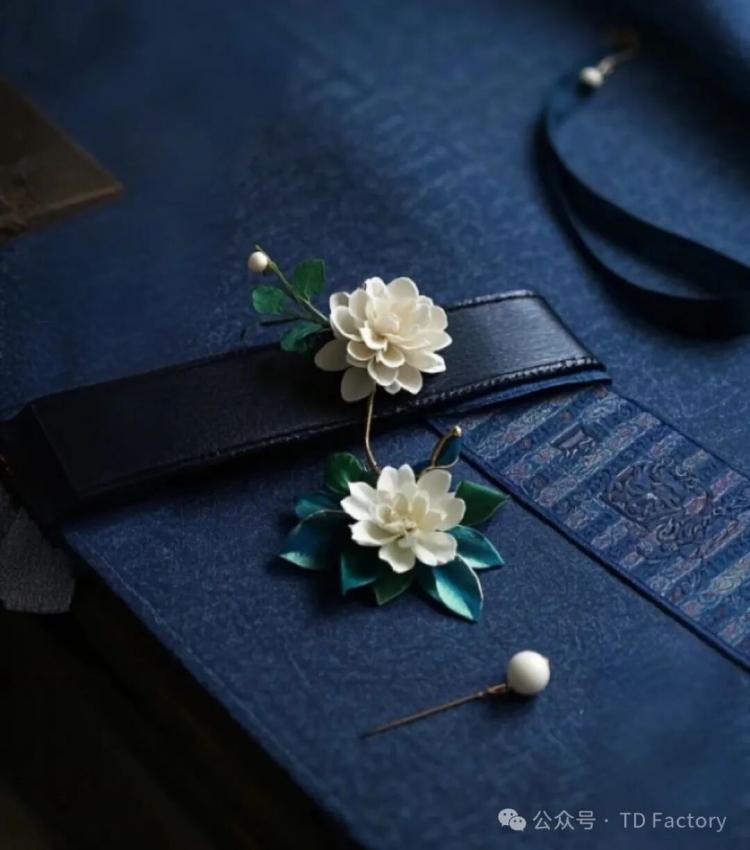
缠花的魅力,在于它用最朴素的材料,创造出了最细腻的美。一根铜丝,是骨架也是风骨;一缕彩线,是色彩也是情怀。在快节奏的当下,缠花匠人指尖的每一次缠绕,都是对慢时光的坚守。当我们佩戴一朵缠花,不仅是装点自己,更是在传承一份跨越千年的生活智慧——原来美,从来都不需要昂贵的材质,只需要一颗热爱生活的匠心。这朵永不凋零的花,正等着更多人发现它的美,让它在时光里继续绽放。
The charm of chan hua (Chinese wire-wrapped flowers) lies in its ability to create the most delicate beauty from the simplest materials. A single piece of copper wire serves not only as a framework but also as the embodiment of strength; a strand of colored thread carries not just hues but also heartfelt emotions. In this fast-paced era, every twist of the wire in the hands of a chan hua craftsman is a commitment to slowing down time. When we wear a piece of chan hua, we are not just adorning ourselves, but also passing on a thousand years of wisdom about life, revealing that beauty never depends on expensive materials, but only on a dedicated heart that loves life. This ever-blooming flower awaits more people to discover its beauty, ready to continue flourishing through the passage of time.
版权声明:【除原创作品外,本平台所使用的文章、图片、视频及音乐属于原权利人所有,因客观原因,或会存在不当使用的情况,如,部分文章或文章部分引用内容未能及时与原作者取得联系,或作者名称及原始出处标注错误等情况,非恶意侵犯原权利人相关权益,敬请相关权利人谅解并与我们联系及时处理,共同维护良好的网络创作环境,联系邮箱:603971995@qq.com】