
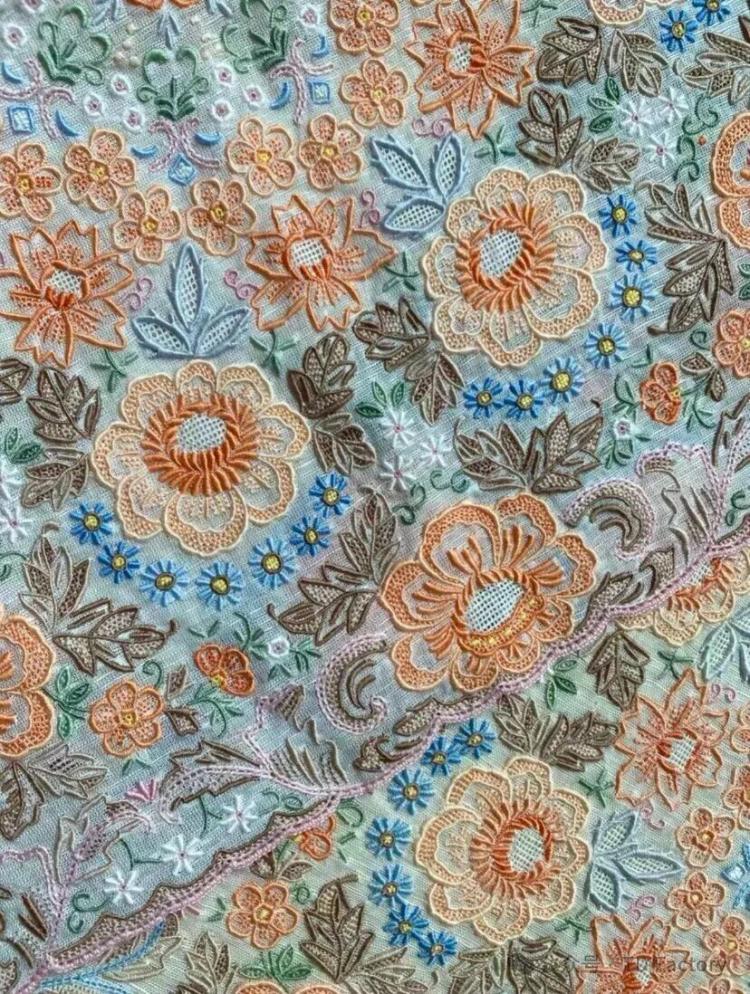
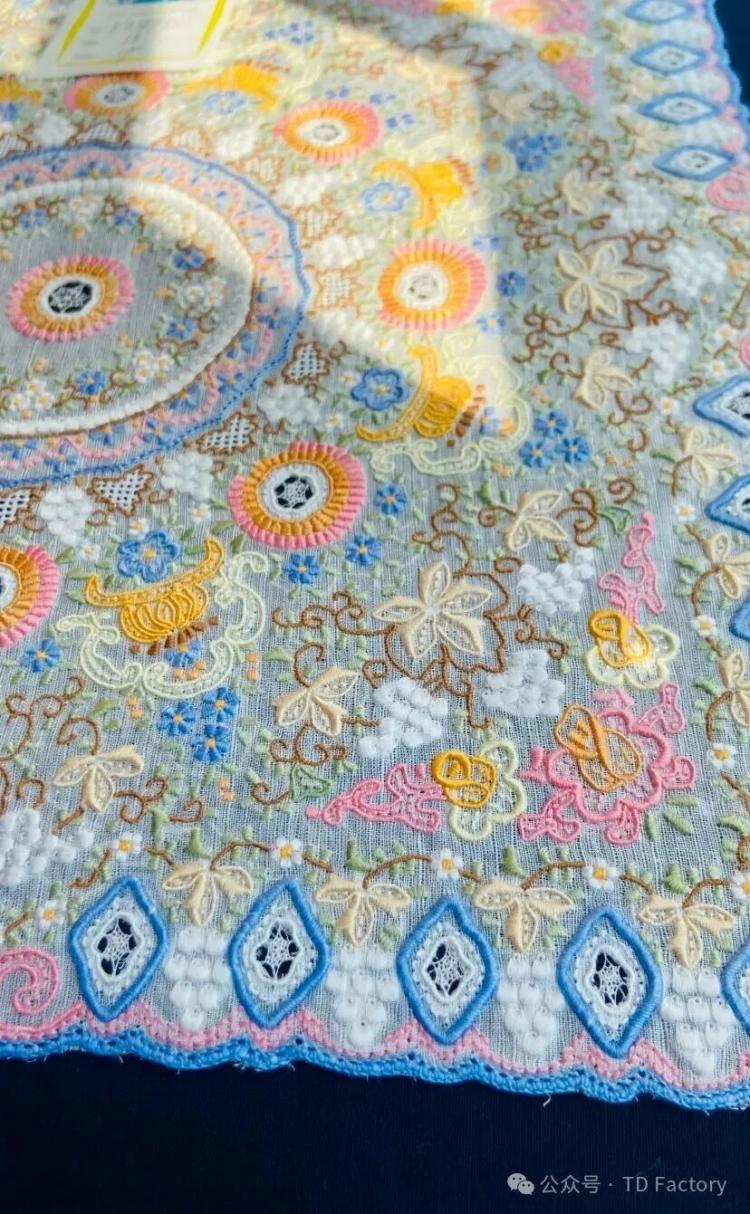
抽纱是广东省潮州市传统美术,国家级非物质文化遗产之一,抽纱业始于清末,它是外来抽通工种与潮州本土刺绣工艺结合的产物,清代是潮州刺绣的繁盛时期,19世纪末,潮州辟为商港,汕头设立海关,西方刺绣抽通工艺随之传入,与潮州当地的刺绣技艺相结合,产生了抽纱刺绣工艺。
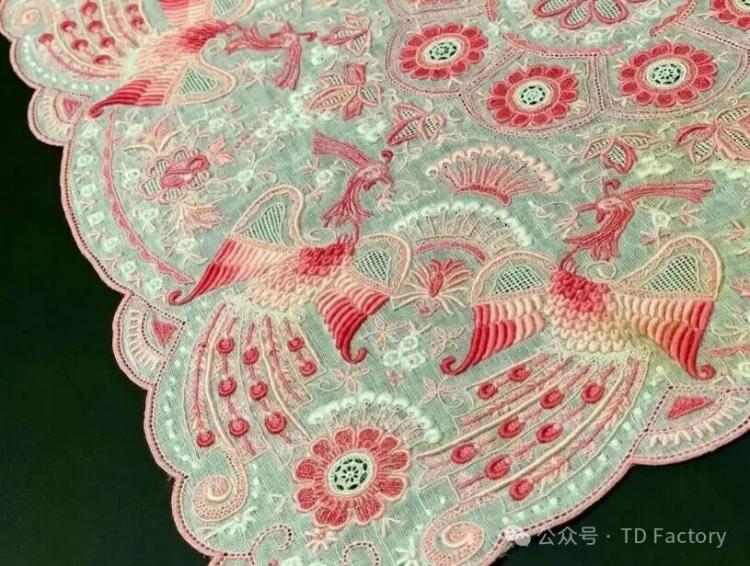
早期的潮州抽纱主要分布在潮州城区,渐次外延至韩江两岸、潮安平原、凤凰山区、黄岗河流域等乡村集镇,并辐射至整个粤东地区以及福建、江西。潮州抽纱图案设计多选取传统的花卉、草纹、龙凤等题材,讲究点、线、面的结合,层次布局疏密得当。潮州抽纱刺绣主要有台布、被枕套、手巾等40多类产品,其构图独特,针法细腻,色调淡雅,美观实用。
In its early stages, Chuzhou lace production was mainly concentrated in the urban areas of Chuzhou. Gradually, it expanded to the banks of the Han River, the Chuan’an Plain, the Fenghuang Mountain Range, and the Huanggang River Basin, among other rural settlements. It also extended to the entire eastern region of Guangdong, as well as to Fujian and Jiangxi provinces. The design motifs of Chuzhou lace often feature traditional flowers, grass patterns, dragons, and phoenixes. Emphasis is placed on the combination of dots, lines, and surfaces, with a well-balanced layering arrangement. Chuzhou lace embroidery includes over 40 products such as tablecloths, pillowcases, and hand towels. Its compositions are unique, the stitching technique is meticulous, the colours are light and elegant, and the designs are both beautiful and functional.
清代是潮州刺绣的繁盛时期,据乾隆《潮州府志》载:“潮州妇女多勤纺织,凡女子十一、二龄,其母即预治嫁衣,故刺绣之功,虽富家不废也。”当时,潮州有绣庄20多家,绣工5000多人,绣品输往新加坡、泰国和马来西亚一带。19世纪末,潮州辟为商港,汕头设立海关,西方刺绣抽通工艺随之传入,与潮州当地的刺绣技艺相结合,产生了抽纱刺绣工艺。
The Qing Dynasty was a period of great prosperity for Chuzhou embroidery. According to the “Gazetteer of the Prefecture of Chuzhou” under the reign of Emperor Qianlong, “Women in Chuzhou are generally diligent in textile work. As soon as a girl reaches the age of around 11 or 12, her mother begins preparing her wedding attire, so embroidery remains an important activity even among the wealthy.” At that time, there were over 20 embroidery workshops in Chuzhou, employing over 5,000 artisans. The embroidered products were exported to Singapore, Thailand, and Malaysia. In the late 19th century, Chuzhou was designated a commercial port, and a customs office was established in Shantou. As a result, Western embroidery techniques were introduced and combined with the local Chuzhou embroidery skills, leading to the development of the “netted embroidery” technique.
潮州抽纱
制作工艺
1.针稿:在设计的最初考虑好抽纱制作的相关环节,在设计稿上用符号标示间出需要抽、剪、绣、织的地方,将完成的设计稿放置在半透明的蜡纸底下,小心用针将设计图案沿边缘一针针扎出。
1Sketching: From the outset of the design process, carefully consider the relevant steps for lace-making. Use symbols on the design sketch to indicate where lace needs to be removed, cut, embroidered, or woven. Place the completed design sketch under a semi-transparent wax paper and carefully use a needle to pierce out the design pattern along the edges.
2.刷花:将剪裁好的亚麻布或者棉布等原料平铺在制作台上,将之前完成的有针孔的透明蜡纸放置其上,蘸上特制的粉靛进行刷花,使颜色通过针孔在布面上留下痕迹。
2. Floral Design: Lay the cut-out linen or cotton fabric, or other materials, flat on a work surface. Place the previously prepared transparent wax paper with holes on top of it. Dip it into a special powder-indigo mixture and use it to create floral designs, allowing the colours to leave marks on the fabric through the holes.
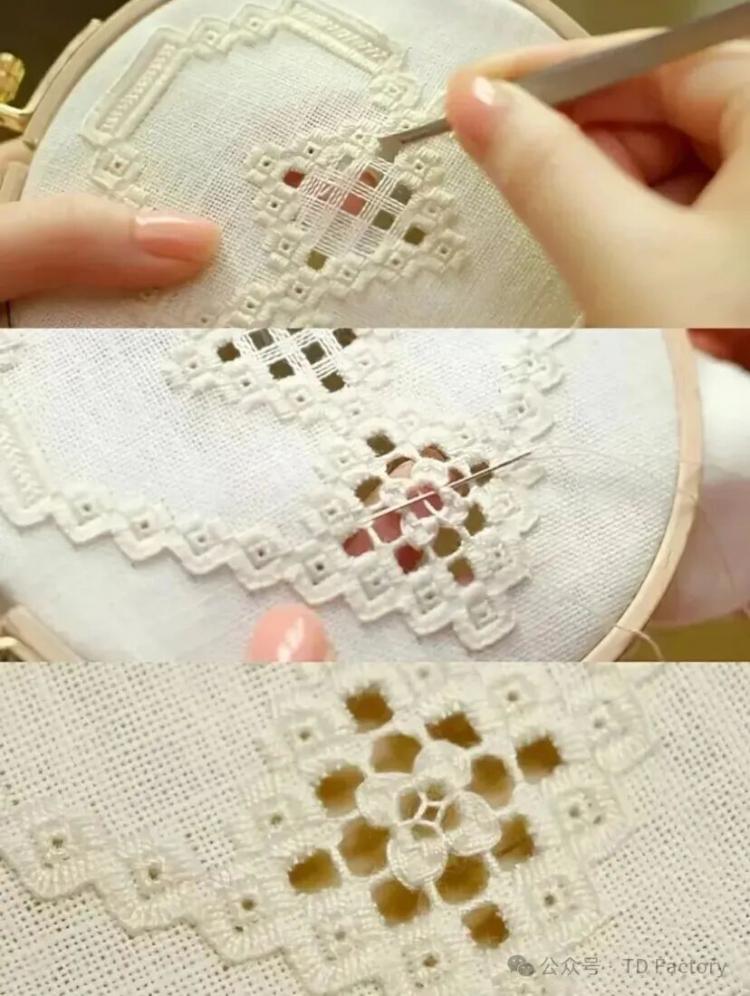
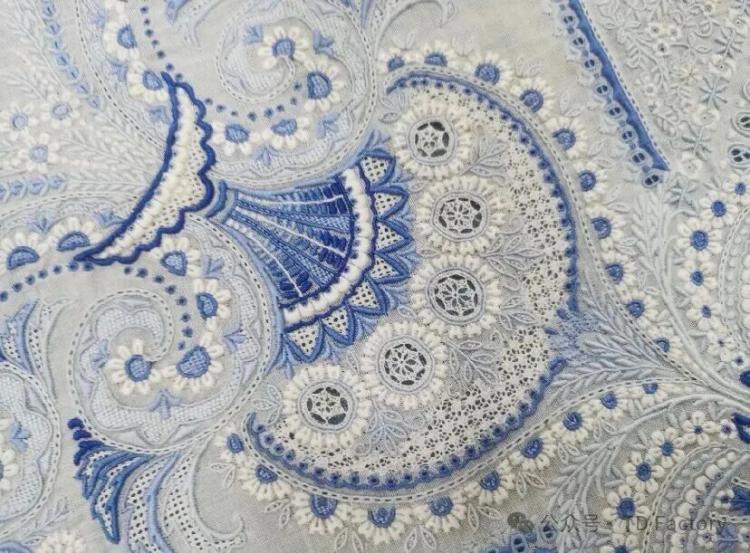
3.抽纱:图案刷制完成后,将面料绷于木棍撑起的木绷上,由抽纱工人依照设计稿将图案中需要镂空部分的经纬线抽出,然后在剩下的未抽走的纱线上通过绣、锁、雕等针法制成精美的图案,最后经过洗烫处理,完成作品。
3. Embroidery: After the patterns have been painted onto the fabric, the material is stretched over a wooden frame supported by wooden rods. The embroidery workers then carefully remove the warp and weft threads in the areas where perforation is required according to the design. The remaining threads are then transformed into intricate patterns through techniques such as stitching, locking, and carving. Finally, the piece undergoes washing and steaming treatments to complete the final product.
版权声明:【除原创作品外,本平台所使用的文章、图片、视频及音乐属于原权利人所有,因客观原因,或会存在不当使用的情况,如,部分文章或文章部分引用内容未能及时与原作者取得联系,或作者名称及原始出处标注错误等情况,非恶意侵犯原权利人相关权益,敬请相关权利人谅解并与我们联系及时处理,共同维护良好的网络创作环境,联系邮箱:603971995@qq.com】