


精美/古雅/独特
非遗紧那罗——神鸟翩跹中的文化传承
在云南边陲的雨林深处,有一种舞蹈如神鸟降临般灵动——傣族紧那罗舞,这只承载着千年信仰与爱情寓意的“文化精灵”,于2022年12月被云南省人民政府正式列入第五批省级非物质文化遗产代表性项目,从此在非遗的星河中绽放出专属光芒。
Deep in the rainforests of Yunnan's borderland, there is a dance as agile as the arrival of a divine bird - the Dai Kinnara Dance. This "cultural elf" carrying thousands of years of beliefs and love meanings was officially included in the fifth batch of provincial intangible cultural heritage representative projects by the People's Government of Yunnan Province in December 2022, and has since shone with its own light in the galaxy of intangible cultural heritage.
一、紧那罗的历史脉络
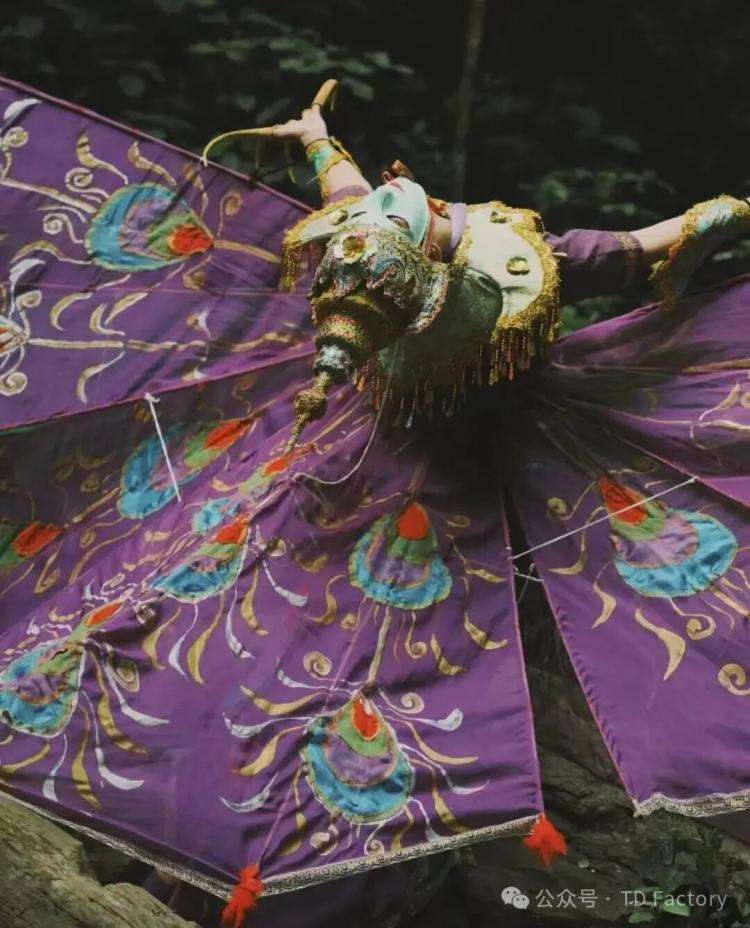
紧那罗的历史脉络蜿蜒悠长,其源头可追溯至印度佛教神话,原是半人半鸟的乐神与护法,随着南传上座部佛教的传播,飘洋过海来到东南亚,最终在云南耿马孟定的傣族聚居地生根发芽。孟定土司时期,它已成为佛教法事、祭寨神、开门节等重要场合的核心礼仪,用舞蹈诉说着“紧那拉”与“紧那丽”这对神鸟忠贞不渝的爱情传说。清代水陆画中,便已留下紧那罗戴鸟冠、着武饰的形象,见证着它与中华文化的深度融合。历经三个世纪的传承,舞蹈从最初的宗教仪式逐步演变为兼具祭祀与娱乐功能的民间艺术,道具历经三代改良,舞步不断丰富,最终形成了如今刚柔并济的艺术风貌。
The historical context of Kinnara is long and winding. Its origin can be traced back to Indian Buddhist mythology, where it was originally a half-human, half-bird music god and Dharma protector. With the spread of Theravada Buddhism, it crossed the oceans to Southeast Asia and finally took root in the Dai-inhabited areas of Mengding, Gengma, and Yunnan. During the Mengding Tusi period, it had already become a core ritual in important occasions such as Buddhist ceremonies, village god worship, and the Door Opening Festival, telling the legend of the unswerving love between the male divine bird "Kinnara" and the female "Kinnari" through dance. In the Water and Land Paintings of the Qing Dynasty, there are already images of Kinnara wearing a bird crown and martial attire, witnessing its in-depth integration with Chinese culture. After three centuries of inheritance, the dance has gradually evolved from an initial religious ritual into a folk art with both sacrificial and entertainment functions. The props have undergone three generations of improvement, and the dance steps have been continuously enriched, ultimately forming the current artistic style that combines hardness and softness.

二、匠心独运:紧那罗舞道具制作过程
紧那罗舞的惊艳亮相,离不开背后耗时费力的道具制作,每一件配饰都凝聚着传承人的匠心巧思:
1. 骨架选材与塑形:精选生长三年以上的老毛竹,截取中部170厘米、纹理笔直无虫眼的路段,削制成四十四根长短粗细各异的圆竹,作为翅膀的核心支撑骨架,经传承人近四十年验证,这种材质轻便且坚韧,最适合舞蹈动作舒展。
2. 骨架阴干处理:将成型的竹制骨架每日翻转三次,在通风阴凉处持续阴干十四日,避免暴晒导致开裂变形,确保骨架的稳定性与耐用性。
3. 腰带缝制加固:采用双层布料手工缝制腰带,针脚细密紧实,既保证承重能力,又能防止舞蹈中道具移位或脱落,为骨架安装打下基础。
4. 羽翼面料裁剪:挑选橙、红、黄、绿四种鲜艳绸缎,裁剪出十二块主面料用于覆盖骨架,再裁制四十张同款小布料,模拟孔雀翎羽的层次感,外侧边缘还需缝制花边点缀。
5. 羽翼分层组装:神鸟之翼分为四层结构,每层由两片翅膀和一片尾巴组成,将彩色绸缎按大小分层黏贴固定,层层叠加营造出丰满飘逸的羽感,仿佛神鸟展翅时的灵动姿态。
6. 整体组合成型:用坚韧的绳子将竹制骨架牢牢绑扎在腰带上,采用可拆卸设计,既方便舞者穿戴收纳,又不影响跳跃、翻滚等大幅度舞蹈动作。
7. 配饰细节完善:搭配硬纸板制成的“板巩”鸟冠与泥巴塑形的“嘎那”面具,鸟冠点缀金箔,面具勾勒神鸟眉眼,让舞者瞬间化身为传说中的紧那罗神鸟。
Ingenuity in Craftsmanship: The Production Process of Kinnara Dance Props
The stunning appearance of the Kinnara Dance is inseparable from the time-consuming and labour-intensive prop production behind it. Each accessory embodies the ingenuity of the inheritors:
1. Selection and shaping of the framework: Choose old moso bamboo that has grown for more than three years, cut a 170-centimetre section from the middle with straight grains and no insect eyes, and carve it into forty-four round bamboos of different lengths and thicknesses to serve as the core support framework of the wings. Verified by the inheritors for nearly forty years, this material is lightweight and tough, most suitable for the stretching of dance movements.
2. Air-drying treatment of the framework: Flip the formed bamboo framework three times a day and air-dry it in a well-ventilated and cool place for fourteen consecutive days to avoid cracking and deformation caused by exposure to the sun, ensuring the stability and durability of the framework.
3. Sewing and reinforcing the waist belt: Hand-sew the waist belt with double-layer fabric with dense and firm stitches, which not only ensures the load-bearing capacity but also prevents the props from shifting or falling off during the dance, laying the foundation for the installation of the framework.
4. Cutting of wing fabrics: Select four bright silk satins of orange, red, yellow, and green, cut twelve main fabrics to cover the framework, and then cut forty small pieces of the same fabric to simulate the layering of peacock feathers. The outer edges need to be sewn with lace for decoration.
5. Layered assembly of wings: The divine bird's wings are divided into four layers, each consisting of two wings and one tail. Fix the colored silk satins by pasting them in layers according to size, stacking them to create a plump and flowing feather effect, as if the divine bird is spreading its wings nimbly.
6. Overall combination and shaping: Firmly bind the bamboo framework to the waist belt with strong ropes, adopting a detachable design, which is convenient for dancers to wear and store, and does not affect large-scale dance movements such as jumping and rolling.
7. Improvement of accessory details: Match the "Bangong" bird crown made of cardboard and the "Gana" mask shaped with mud. The bird crown is decorated with gold foil, and the mask outlines the eyebrows and eyes of the divine bird, allowing the dancer to instantly transform into the legendary Kinnara divine bird.

三、神鸟翩跹:紧那罗舞的鉴赏赏析
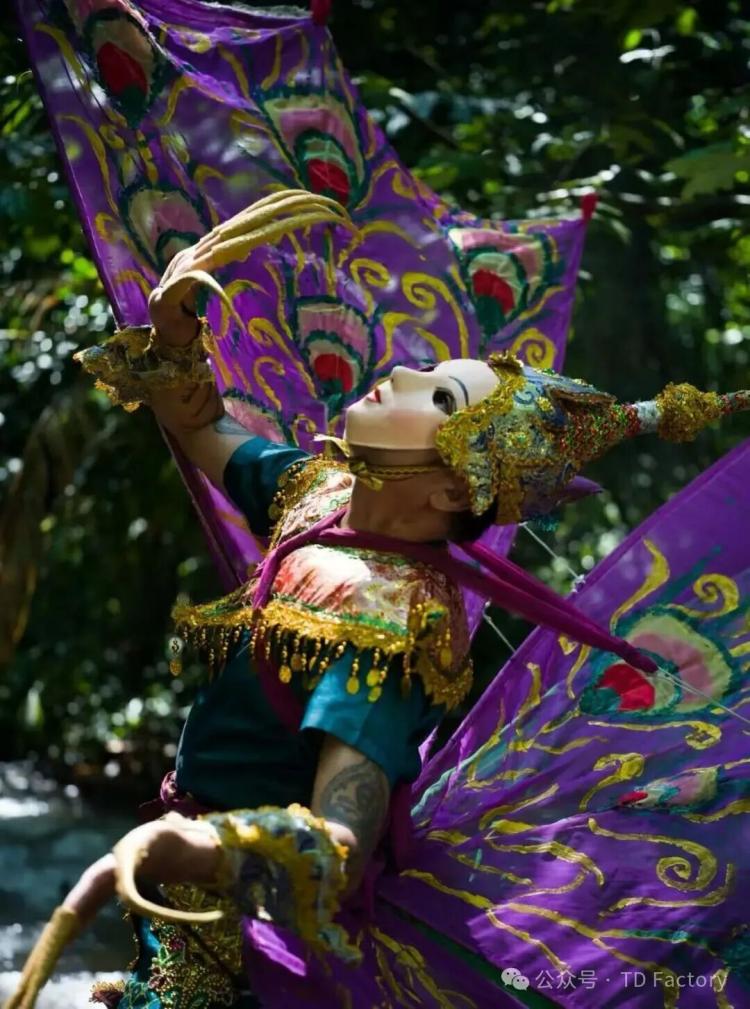
观赏紧那罗舞,宛如闯入一场虚实交织的神话梦境,其艺术魅力体现在形、神、韵的完美融合。从舞蹈形态来看,它以雌雄双鸟共舞为核心形式,雄鸟“紧那拉”的动作以傣拳为基础,点步刚劲、跳跃有力,头部灵活转动间尽显阳刚之气;雌鸟“紧那丽”的舞姿则柔美婉约,转肩、梳羽等动作细腻传神,刚柔相济的对比勾勒出神鸟的鲜活形象。八个基本舞步中,单腿跳的轻盈、拜佛动作的虔诚、翻滚的灵动,每一个细节都精准复刻了神鸟的习性,赋予舞蹈强烈的雕塑感。
音乐伴奏是紧那罗舞的灵魂所在,钢琴片主导旋律走向,云铓把控节拍框架,象脚鼓、菠萝鼓、木鱼鼓等打击乐器层层叠加,古调歌词吟唱着神鸟的爱情传说,旋律时而悠扬婉转,时而欢快激昂,与舞蹈动作形成天衣无缝的契合。舞者身着色彩斑斓的羽翼服饰,在光影中展翅、盘旋,面具下的眼神坚定而灵动,仿佛真的是从喜马万达森林降临人间的神鸟,将忠贞爱情与对美好生活的向往传递给在场的每一位观众。
更深层次的鉴赏,在于舞蹈承载的文化内涵。它既是傣族对南传佛教信仰的具象化表达,也是对自然的敬畏与感恩,更是对忠贞爱情、万物和谐的永恒赞颂。传承人昆弄所说的“模仿无用,要相信自己是神”,正是这种文化内核的体现——舞者通过肢体语言实现“人神合一”,让观众在欣赏艺术之美的同时,感受到傣族深厚的文化底蕴与精神追求。
The Grace of the Divine Bird: Appreciation and Criticism of the Kinnara Dance
Watching the Kinnara Dance is like breaking into an illusory and real mythical dream, whose artistic charm lies in the perfect integration of form, spirit, and rhyme. In terms of dance form, it takes the co-dance of male and female divine birds as the core form. The movements of the male bird "Kinnara" are based on Dai boxing, with firm stepping, powerful jumping, and flexible head turning, showing a strong masculine spirit; the dance posture of the female bird "Kinnari" is gentle and graceful, with delicate and vivid movements such as shoulder turning and feather combing. The contrast between hardness and softness outlines the vivid image of the divine bird. Among the eight basic dance steps, the lightness of single-leg jumping, the piety of Buddha-worshipping movements, and the agility of rolling, every detail accurately reproduces the habits of the divine bird, endowing the dance with a strong sense of sculpture.
The musical accompaniment is the soul of the Kinnara Dance. The piano piece leads the melody direction, the yunmang controls the beat framework, and percussion instruments such as elephant-foot drums, pineapple drums, and wooden fish drums are layered. The ancient lyrics sing the love legend of the divine bird, and the melody is sometimes melodious and gentle, sometimes cheerful and passionate, forming a seamless fit with the dance movements. The dancers wear colourful winged costumes, spreading their wings and circling in the light and shadow. Their eyes under the masks are firm and agile, as if they are really divine birds descending from the Himavanta Forest to the world, conveying the unswerving love and longing for a better life to every audience present.
A deeper appreciation lies in the cultural connotation carried by the dance. It is not only a concrete expression of the Dai people's belief in Theravada Buddhism, but also a respect and gratitude for nature, as well as an eternal praise for loyal love and harmony among all things. What the inheritor Kun Nong said, "Imitation is useless; you must believe you are a god," is exactly the embodiment of this cultural core - through body language, the dancers achieve "the unity of man and god," allowing the audience to feel the profound cultural heritage and spiritual pursuit of the Dai people while appreciating the beauty of art.
四、薪火相传:紧那罗的文化价值与未来
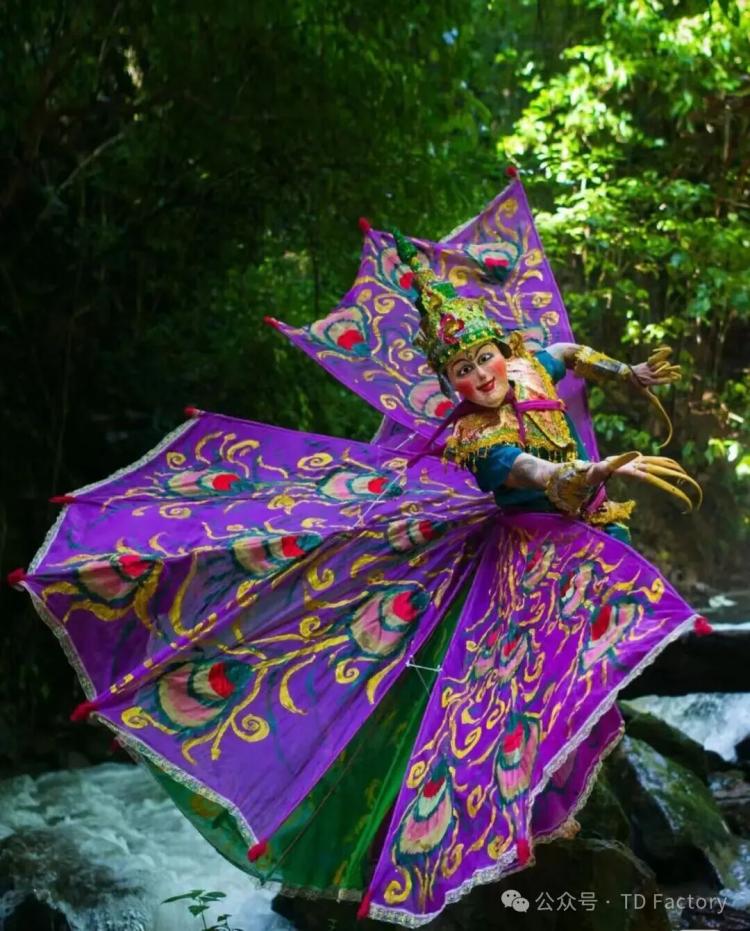
从远古神话中的神鸟传说,到如今的省级非物质文化遗产,紧那罗舞早已超越了艺术本身,成为傣族文化的活态载体。它记录着傣族与自然相处的智慧、对信仰的坚守、对爱情的珍视,是连接历史与当下的文化纽带。在传承过程中,它既保留了“雌雄共舞”“宗教礼仪”等核心传统,又通过道具改良、校园教学、节庆展演等方式不断创新,让这门古老艺术在现代社会焕发生机。
如今,在耿马县文化馆的推动下,在传承人刀永珍、昆弄等人的坚守下,紧那罗舞不仅走进了专业院校的课堂,更通过短视频、非遗大赛等渠道走向全国,成为云南文旅的一张亮丽名片。这只从雨林中飞出的神鸟,正用灵动的舞姿告诉世界:非遗不是博物馆里的标本,而是活在当下、生生不息的文化力量。
让我们守护这份匠心与信仰,让紧那罗舞的羽翼永远舒展,让千年文化的薪火在代代相传中永不熄灭。
Passing the Torch: The Cultural Value and Future of Kinnara
From the divine bird legend in ancient myths to the current provincial intangible cultural heritage, the Kinnara Dance has long transcended art itself and become a living carrier of Dai culture. It records the Dai people's wisdom in coexisting with nature, their adherence to beliefs, and their cherishment of love, serving as a cultural link connecting history and the present. In the process of inheritance, it not only retains core traditions such as "male and female co-dancing" and "religious rituals" but also continuously innovates through prop improvement, campus teaching, and festival performances, allowing this ancient art to glow with vitality in modern society.
Today, under the promotion of the Gengma County Cultural Centre and the persistence of inheritors such as Dao Yongzhen and Kun Nong, the Kinnara Dance has not only entered the classrooms of professional colleges and universities but also gone nationwide through short videos, intangible cultural heritage competitions and other channels, becoming a bright business card of Yunnan's cultural tourism. This divine bird flying out of the rainforest is telling the world with its agile dance: intangible cultural heritage is not a specimen in a museum, but a living and endless cultural force.
Let us guard this ingenuity and belief, let the wings of the Kinnara Dance always spread, and let the torch of thousands of years of culture never go out in the inheritance from generation to generation.

版权声明:【除原创作品外,本平台所使用的文章、图片、视频及音乐属于原权利人所有,因客观原因,或会存在不当使用的情况,如,部分文章或文章部分引用内容未能及时与原作者取得联系,或作者名称及原始出处标注错误等情况,非恶意侵犯原权利人相关权益,敬请相关权利人谅解并与我们联系及时处理,共同维护良好的网络创作环境,联系邮箱:603971995@qq.com】